 Ultimate guide
Best Material for a Residential Driveway: 2026 Guide
Table of Contents
- Driveway Material Types: What Your Options Are
- Concrete Driveway Pros and Cons: A Detailed Look
- Asphalt vs. Concrete Driveway: Which Performs Better?
- How Long Does a Concrete Driveway Last and What Affects Lifespan?
- Low-Maintenance Driveway Materials for Busy Homeowners
- Material Comparison: Cost, Durability, and Maintenance at a Glance
- How to Choose the Right Driveway Material for Your Home
- Frequently Asked Questions
Last Updated: October 15, 2026
Driveway Material Types: What Your Options Are
Choosing the best driveway material affects curb appeal, maintenance, longevity, and resale value.
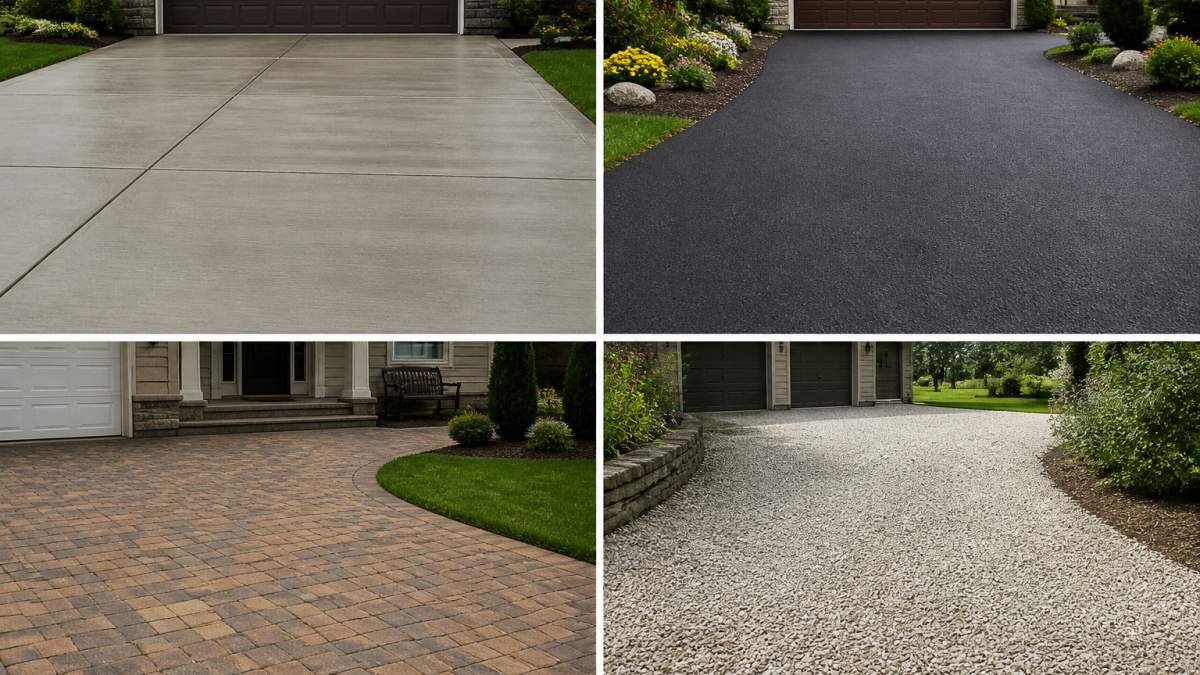
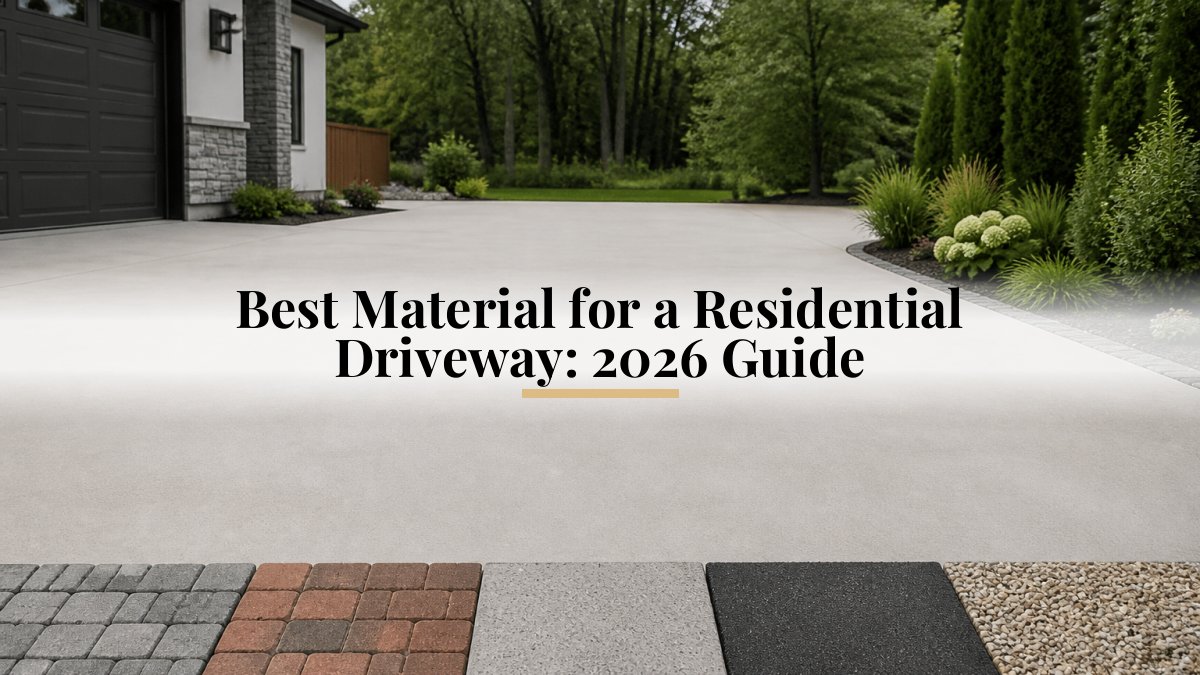
Four options dominate: concrete, asphalt, gravel, and pavers. Each suits different situations.
Concrete Driveways
Concrete is the most durable, lowest-maintenance option, lasting 30 to 40 years when properly installed. It's smooth, clean, and stain-resistant when sealed, and handles freeze-thaw cycles reasonably well, though salt and moisture cause deterioration.
The drawbacks are upfront cost and the need for careful base preparation and professional installation to prevent settling or cracking. It requires sealing every 2-3 years, and larger cracks can compromise structural integrity.
Asphalt Driveways
Asphalt costs less upfront, installs faster, and is easier to repair in spots. It offers good wet traction, and its dark surface absorbs heat, an advantage in cold climates but problematic in intense sun.
The trade-off is durability: asphalt lasts 15 to 20 years, softens in extreme heat, ruts under heavy vehicles, and deteriorates from oil and gasoline. Seal coating every 2-3 years is essential.
Gravel Driveways
Gravel is the most affordable option upfront, spread over a compacted base. It drains excellently and is easy to replace in small sections.
Maintenance is the critical limitation: raking and leveling multiple times per year, constant weeds, dust and loose stone scattering onto landscaping, and complete replenishment every 3-5 years.
Pavers, Brick, and Stone
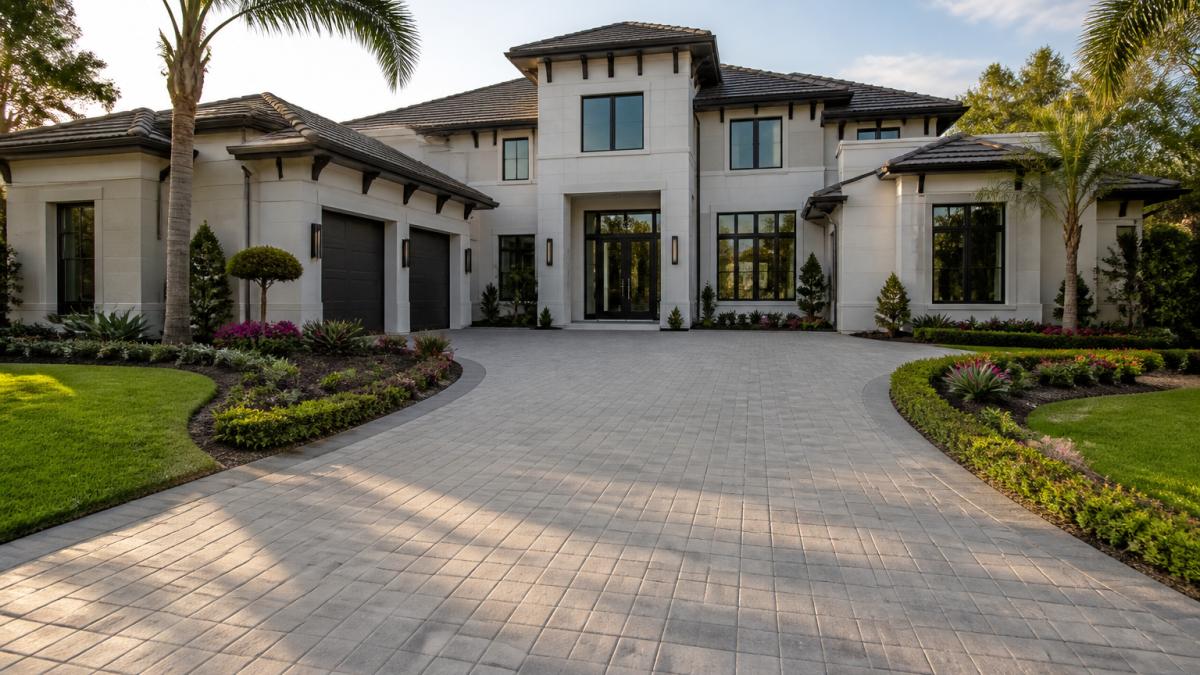
Permeable pavers, brick, and natural stone offer premium aesthetics and environmental benefits: water drains through joints, reducing runoff and supporting groundwater recharge, and individual units can be replaced without affecting the whole surface.
The cost is substantially higher than concrete or asphalt, and pavers require precise base preparation and professional laying. Over time, uneven settling creates trip hazards, and weeds grow between joints.
Concrete Driveway Pros and Cons: A Detailed Look
Concrete dominates residential driveways because a quality installation, proper subgrade preparation, reinforcement, and sealing, delivers unmatched reliability.
Concrete resists oil and chemical stains better than asphalt, doesn't soften in heat or become brittle in cold, and is easy to sweep.
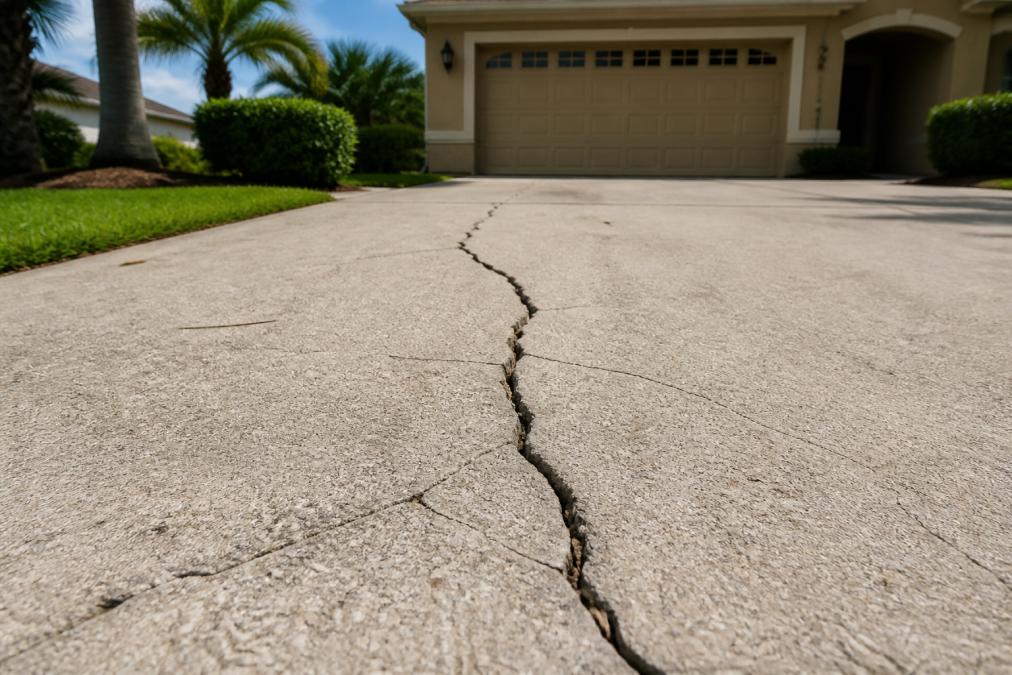
The limitations are manageable. Concrete cracks as it ages, normal, not a defect.
De-icing salts accelerate deterioration: repeated freeze-thaw cycles plus salt cause surface spalling and scaling, shortening lifespan in harsh climates.
Asphalt vs. Concrete Driveway: Which Performs Better?
Asphalt and concrete are the two most common hard-surface driveway materials, and neither wins universally. The right pick depends on climate, soil, drainage, traffic, maintenance tolerance, and ownership horizon.
How each material actually behaves
Asphalt is a flexible pavement, aggregate bound with asphalt cement, laid in two lifts over a compacted base. It tolerates minor subgrade movement better than concrete, resists through-slab cracking, installs faster, and patches easily.
Concrete is a rigid pavement. A proper slab uses a compacted base, often a vapor barrier, reinforcement, control joints, and a cured, often air-entrained mix. Air entrainment creates microscopic bubbles that give freezing water room to expand, which is why it outperforms non-air-entrained concrete in freeze-thaw climates.
Lifecycle cost: the number that actually matters
Upfront price alone is misleading. Cost per year of service, spreading installation, maintenance, repairs, and replacement across a consistent horizon, is more useful.
- Asphalt needs seal coating every 2-3 years, crack filling, and often a mill-and-overlay. Service life is commonly cited at 15-20 years.
- Concrete needs sealing every 2-3 years, occasional crack repair, and joint resealing. Service life is commonly cited at 30-40 years, longer when base prep, drainage, and mix design are done well.
Because concrete costs more upfront but lasts roughly twice as long, cost per year often converges or favors concrete over a long ownership period, but only if the base was built correctly.
Climate, soil, and drainage
- Freeze-thaw climates: Air-entrained concrete with proper jointing and drainage holds up better than asphalt, which becomes brittle and vulnerable to plow damage. Salts accelerate both, but concrete is more sensitive to salt scaling.
- Hot climates: Asphalt softens and ruts under heavy loads; concrete stays stable but can crack thermally if joint spacing and reinforcement are wrong.
- Clay soils and poor drainage: Both need a well-draining base; on expansive clay, a poorly drained subgrade can heave and crack either surface. Permeable pavers or a designed drainage system may be better.
Maintenance and repair reality
Asphalt is easier and cheaper to patch, and localized failures don't require replacing the whole surface. Concrete repairs are more involved, crack injection, partial-depth patching, or slab replacement, and color matching is difficult.
Everyday usability
- Snow removal: Concrete is easier to shovel and plow but can be slick; asphalt offers more grip but is easily gouged by plow blades.
- Accessibility: Both can be made accessible; concrete's consistent, low-slope finish often makes it easier for wheelchair or walker access.
- Heat: Asphalt absorbs more heat and stays hotter; concrete reflects more and stays cooler.
A simple decision framework
- Choose asphalt if: upfront budget is the priority, you may sell soon, your climate is mild, and you'll seal it every 2-3 years.
- Choose concrete if: you plan to stay long-term, want lower recurring maintenance, need a smooth accessible surface, and your site drains well or can be engineered to.
- Choose neither if: your soil is expansive, drainage is poor, or the grade is steep, permeable pavers or a designed base and drainage system may outperform both.
NRMCA guidance on concrete pavement design and air entrainment
No material overcomes bad base preparation. If a quote skips excavation depth, compaction, or drainage details, the material choice matters far less than the installation quality.
How Long Does a Concrete Driveway Last and What Affects Lifespan?
A well-installed concrete driveway typically lasts 30 to 40 years, sometimes 50 or longer.
Base preparation is the most critical factor.
Freeze-thaw cycles accelerate deterioration: water enters small cracks, freezes, expands, and breaks the concrete apart.
Seal coating extends lifespan significantly.
Traffic load matters: heavy vehicles or repeated parking in one spot accelerate wear, though residential driveways typically see light loads.
Installation quality determines everything.
Low-Maintenance Driveway Materials for Busy Homeowners
If maintenance feels burdensome, concrete is your best choice.
Asphalt requires seal coating every 2-3 years and patching as cracks develop.
Gravel is a maintenance nightmare: raking multiple times per year, constant weeding, and complete replenishment every few years.
Pavers and stone are beautiful but demand regular attention: weeds between joints, uneven settling, and specialized cleaning.
For the lowest-maintenance driveway material, concrete is the only practical answer.
Material Comparison: Cost, Durability, and Maintenance at a Glance
Most comparisons stop at lifespan and maintenance frequency, leaving out what actually determines whether a material works for your household: cost per year, climate and soil fit, drainage, accessibility, and usability.
| Material | Typical Lifespan | Maintenance Frequency | Climate Fit | Drainage / Permeability | Accessibility & Usability | Best For |
|---|---|---|---|---|---|---|
| Concrete | 30-40 years | Sealing every 2-3 years; occasional crack/joint repair | Good in freeze-thaw when air-entrained and jointed; stable in heat | Low permeability; sheds water, needs positive drainage | Smooth, consistent surface; good for wheelchairs and walkers; can be slick when wet/icy | Long-term owners wanting low recurring maintenance and a smooth surface |
| Asphalt | 15-20 years | Seal coating every 2-3 years; crack filling; possible overlay | Good in mild climates; softens and ruts in sustained heat; brittle in cold | Low permeability; sheds water, needs positive drainage | Textured, good wet traction; plow blades can gouge it | Budget-conscious owners, shorter ownership windows, mild climates |
| Gravel | 3-5 years before replenishment | Raking and leveling multiple times per year; weed control | Works in most climates but erodes on slopes and washes out in heavy rain | High permeability; excellent drainage but can migrate | Loose surface; difficult for wheelchairs, walkers, and strollers; dusty | Rural or low-traffic sites, rustic aesthetics, tight budgets |
| Pavers / Brick / Stone | 25-50 years | Weeding, joint sand replenishment, occasional unit replacement | Good in freeze-thaw when installed on a proper base; units can heave if base fails | Permeable when open-graded joints and base are used; reduces runoff | Can be smooth or textured; joints may affect wheeled access; individual units replaceable | Premium appearance, permeable drainage, design flexibility |
How to read this table
Lifespan is not a guarantee. It assumes proper base preparation, compaction, drainage, and material quality.
Maintenance frequency isn't the same as maintenance cost. Asphalt's frequent seal coating is inexpensive per visit; concrete's less frequent sealing is modest, but its repairs cost more.
Climate fit is regional. In freeze-thaw regions, air-entrained concrete with proper jointing and drainage outperforms asphalt. In hot regions, asphalt's heat absorption and rutting risk increase.
EPA guidance on permeable pavement and stormwater runoff
There is no single best material. The best choice is the one that matches your climate, soil, drainage, accessibility needs, maintenance tolerance, and ownership horizon, installed on a properly prepared base.
How to Choose the Right Driveway Material for Your Home
Start by identifying your priorities: cost, durability, aesthetics, or maintenance burden.
Evaluate drainage.
Assess your maintenance tolerance. If you'll seal and reseal, concrete and asphalt are manageable.
Think about resale value.
Consult a professional contractor. We provide free estimates and can guide you toward the material that delivers the best value.
Selecting the best driveway material affects your property for decades.
Frequently Asked Questions
What is the most durable material for a driveway?
Concrete and asphalt are the most durable residential driveway materials. Concrete typically lasts 25-30 years or longer with proper maintenance, while asphalt lasts 15-20 years. Concrete withstands freeze-thaw cycles better in colder climates and resists cracking from heavy vehicle traffic. Pavers and brick also offer excellent durability but require more maintenance. The best choice depends on your climate, traffic volume, and how well the base is prepared during installation.
How long does a concrete driveway last?
A properly installed concrete driveway typically lasts 25-30 years, with some lasting 40 years or more. Lifespan depends on base preparation, climate conditions, freeze-thaw cycles, and maintenance. Sealing the surface every 2-3 years and addressing cracks promptly extends life significantly. Poor drainage or inadequate base compaction shortens lifespan. In freeze-thaw regions, air-entrained concrete (designed to resist ice damage) performs better than standard concrete.
What is the lowest-maintenance driveway material?
Concrete is the lowest-maintenance residential driveway material when properly sealed. It requires periodic sealing (every 2-3 years), occasional cleaning, and prompt crack repair. Asphalt requires more frequent maintenance, including seal-coating every 2-3 years and tar-patching of cracks. Gravel needs regular raking and top-up material. Pavers require weed control and sand re-sanding between joints. If minimal upkeep is your priority, sealed concrete offers the best balance of durability and ease of care.
Is it cheaper to blacktop or concrete a driveway?
Asphalt (blacktop) typically costs less upfront than concrete for new installation. However, concrete offers better long-term value because it lasts longer and requires less frequent maintenance. Asphalt needs seal-coating every 2-3 years and tar-patching of cracks, which add up over time. Concrete may need sealing and crack repair, but less frequently. When calculating lifecycle cost per year, concrete often becomes the more economical choice despite higher initial investment. Your local climate and soil conditions also affect total cost.
Which driveway material is best for heavy vehicles?
Concrete is the best choice for driveways with heavy vehicle traffic. Its rigid surface distributes loads evenly and resists rutting and deformation. Proper base preparation (compacted road base and subbase) is critical for load-bearing capacity. Asphalt can soften in heat and develop ruts under heavy repeated traffic. Gravel is unsuitable for heavy vehicles. Pavers work if installed on a solid base, but individual units can crack under concentrated loads. For commercial or high-traffic residential use, concrete with adequate base support is the most reliable option.
What driveway material is easiest to repair?
Asphalt is easiest to repair for small damage; cracks can be sealed or patched quickly without matching surrounding material. Concrete cracks can be sealed or filled, but larger repairs may be visible. Pavers are simple to replace individually without affecting the entire surface. Gravel requires only topping up the worn areas. However, ease of repair doesn't equal longevity. Concrete driveways need repairs less frequently overall, making them more cost-effective long-term despite repair visibility.
Which driveway surface handles rain and drainage best?
Permeable materials like gravel and porous pavers with open joints handle drainage best, allowing water to filter through rather than pooling. Concrete and asphalt are impermeable and require proper slope and drainage systems (gutters, swales, or perimeter drainage) to prevent standing water. Poor drainage leads to cracking, erosion, and base failure. When selecting a material, consider your soil type and local rainfall. If drainage is a concern, permeable pavers or recycled asphalt with proper grading offer better water management than solid concrete or asphalt surfaces.