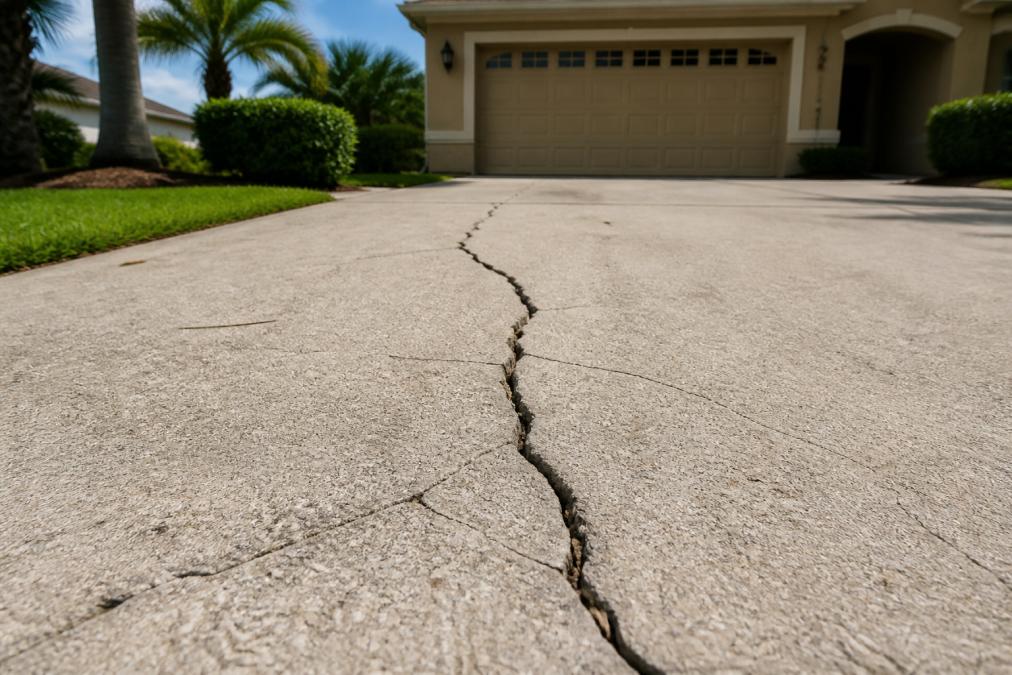
 ultimate-guide
Why Concrete Driveways Crack in Summer Heat
Table of Contents
- How Thermal Expansion and Contraction Cause Summer Cracks
- Moisture Loss and Evaporation During Hot Weather
- How to Prevent Concrete Cracking in Hot Weather
- Signs of Concrete Driveway Failure to Watch For
- Repairing Heat-Related Concrete Damage
- The Role of Concrete Mix Design in Hot Climates
- Frequently Asked Questions
Last Updated: September 25, 2026
How Thermal Expansion and Contraction Cause Summer Cracks
Understanding why concrete driveways crack in summer heat, because the material expands when temperatures rise and contracts when they cool, creating internal stress the concrete cannot always withstand, is essential for prevention.
When the sun heats a concrete slab, the surface temperature can climb 30-40 degrees higher than the air temperature. This uneven heating causes the top layer to expand faster than the cooler material beneath it, generating tensile stress that exceeds concrete's lower tensile strength.
Concrete is rigid and cannot bend under stress; it either holds firm or fractures. Aggregate expands at different rates than the cement paste, amplifying internal strain.
Mix design significantly affects thermal expansion. A poorly designed mix for hot climates cracks more easily than one engineered for temperature extremes.
Moisture Loss and Evaporation During Hot Weather
In summer heat, water evaporates rapidly from concrete, causing shrinkage that adds stress on top of thermal expansion.
On hot, dry, windy days, the surface shrinks faster than the interior, creating plastic shrinkage cracks, the fine, shallow cracks visible on newly poured slabs.
When the subgrade dries out, it can settle unevenly, causing the slab above to crack as it loses support, a hidden threat in hot climates.
A higher water-cement ratio means more water available to evaporate, leading to greater shrinkage. Hot-climate concrete uses lower water-cement ratios and additives to reduce evaporation.
How to Prevent Concrete Cracking in Hot Weather
Learning why concrete driveways crack in summer heat helps you understand that preventing such cracking requires managing evaporation rates, thermal cycling, and structural support simultaneously.
Understanding the Curing Window and Humidity's Role
The curing window, the first 7 to 14 days after pouring, determines much of the concrete's long-term durability, as the material hydrates and is most vulnerable to cracking.
Concrete poured at 90°F with 30% relative humidity loses moisture 3-4 times faster than at 90°F with 70% relative humidity, explaining why the same mix cracks in Arizona but rarely in Florida.
Proper curing slows evaporation, allowing full hydration without excessive shrinkage. Common methods include:
- Curing compounds: Reduce evaporation by 50-75%; most effective in low-humidity environments.
- Plastic sheeting or tarps: Create a microclimate that slows evaporation; require secure anchoring.
- Wet burlap or curing blankets: Keep surface damp; require daily water application in hot weather.
- Evaporation retarders: Chemicals in the mix that slow water loss; valuable in high-wind, low-humidity conditions.
Apply curing compounds immediately after finishing while the surface is wet to prevent rapid evaporation during the first 24-48 hours, when plastic shrinkage cracks are most likely.
In low-humidity environments (below 40% RH), plan for extended curing, 14 days minimum. If humidity exceeds 70% RH, standard curing practices are usually sufficient.
Strategic Joint Spacing and Expansion Joints
Joints are intentional weak points designed to control where cracks form. Without joints, concrete cracks randomly; with proper spacing, cracks form along joint lines where they're easier to manage.
Expansion joints filled with compressible material allow movement with temperature changes. Space them every 4-6 feet for residential driveways in hot climates, extending through the full slab depth.
Contraction joints are shallower cuts spaced every 4-8 feet, with depth about one-quarter the slab thickness (1 inch for a 4-inch driveway).
Install joints within 12-24 hours of pouring. Cutting too late risks uncontrolled cracking; too early causes raveling.
Preventative Sealing and Surface Protection
Sealing after curing provides defense against moisture loss and UV damage, reducing surface temperature by 5-10°F.
- Penetrating sealers (siloxanes, silicates): Don't change appearance; effective 3-5 years.
- Film-forming sealers (acrylics, polyurethanes, epoxies): Provide better sun protection; effective 2-3 years but require more frequent reapplication.
Wait at least 28 days before sealing to allow hydration to complete. Sealing too early traps moisture. If using a curing compound, wait an additional 7-14 days before sealing.
Reseal every 2-3 years to maintain protection. Annual inspection in high-sun areas can extend driveway life by 5-10 years.
Signs of Concrete Driveway Failure to Watch For
Recognizing early signs of heat-related concrete damage allows you to intervene before small cracks become major problems. Some warning signs indicate thermal stress, while others suggest moisture problems or subgrade settlement.
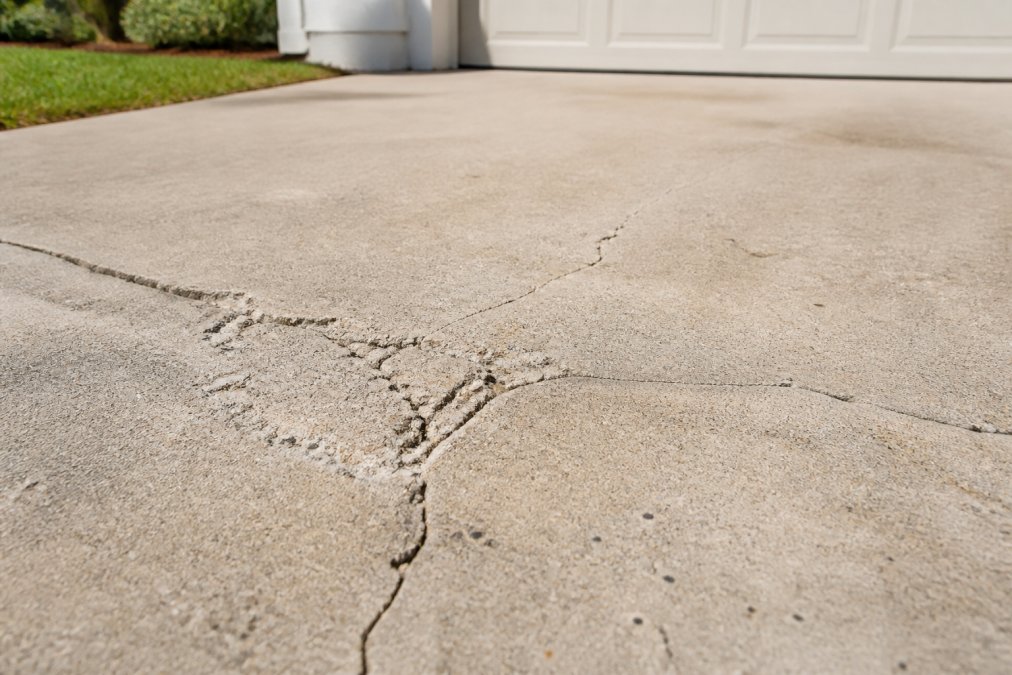
Hairline cracks are often the first sign of thermal stress, forming parallel to edges or radiating from a central point. They signal stress is building.
Alligator cracking (interconnected cracks resembling alligator skin) indicates advanced deterioration and compromised structural integrity.
Spalling (chunks flaking off) can result from freeze-thaw cycles, salt damage, or thermal shock, indicating declining durability.
Uneven settlement, where one section of the driveway sits higher or lower than an adjacent section, indicates subgrade problems. This can result from soil shrinkage under the slab or differential settlement caused by uneven moisture loss in the soil.
Repairing Heat-Related Concrete Damage
Once cracks develop, repair options depend on the severity, location, and cause of the damage. Small cracks can often be sealed, while larger structural cracks may require more extensive repair.
DIY vs. Professional Repair Thresholds
Small hairline cracks (less than 1/8 inch) can be sealed with polyurethane caulk or concrete crack sealant available at hardware stores.
Cracks between 1/8 and 1/2 inch wide benefit from polyurethane injection repair; professional-grade equipment delivers better results.
The Role of Concrete Mix Design in Hot Climates
Mix design, the proportions of cement, aggregate, water, and admixtures, fundamentally affects thermal response. A cool-climate mix cracks more easily in hot weather than one engineered for thermal extremes.
Water-Cement Ratio and Shrinkage Control
The water-cement ratio (w/c) is the weight of water divided by the weight of cement in the mix. It is the single most influential factor in concrete durability and shrinkage.
Chemical Admixtures: Retarders and Pozzolanic Materials
Retarders slow the hydration process, delaying the concrete's initial set time. In hot weather, concrete hydrates faster, generating heat and causing the concrete to stiffen before contractors can finish it properly. Retarders extend the workable window by 1-3 hours, allowing better consolidation and finishing. They also reduce the peak temperature during hydration, which reduces thermal stress. Common retarders include citric acid, tartaric acid, and proprietary chemical blends.
- Reduced heat generation during hydration (fly ash reduces peak temperature by 10-20°F compared to straight cement)
- Improved long-term durability and lower permeability (slowing moisture loss)
- Reduced thermal expansion (pozzolanic concrete expands slightly less than straight cement concrete)
- Lower cost (fly ash is a byproduct of coal-fired power plants and is cheaper than cement)
Air Entrainment and Thermal Stress Relief
Air entrainment is the intentional addition of tiny air bubbles (0.1-0.3 mm diameter) to the concrete. These bubbles serve multiple purposes:
- Freeze-thaw resistance: The bubbles provide space for ice to expand without cracking the concrete (critical in cold climates).
- Thermal stress relief: The bubbles allow the concrete to expand slightly without building up as much internal stress. Air-entrained concrete has lower modulus of elasticity (stiffness), so it flexes slightly under thermal stress rather than cracking.
- Workability: Air bubbles improve the concrete's flow and finishability.
Aggregate Selection and Thermal Properties
Aggregate (stone particles) makes up 60-75% of concrete by volume and significantly influences thermal behavior.
Putting It Together: A Hot-Climate Mix Design
A concrete mix engineered for summer heat typically includes:
- Water-cement ratio: 0.42-0.45
- Fly ash: 20% replacement of cement by weight
- Chemical retarder: Dose adjusted for ambient temperature (higher doses in hotter weather)
- Air entrainment: 4-6% by volume
- Aggregate: 3/4-inch nominal maximum, limestone or granite, well-graded
- Slump: 4-5 inches (workable but not overly wet)
This mix can reduce cracking risk. The benefits can include avoiding repairs and premature replacement.
Frequently Asked Questions
Does extreme heat cause concrete to expand and crack?
Yes. Concrete expands when temperatures rise and contracts when they cool. This thermal cycling creates tensile stress within the slab. When temperature differentials exceed the concrete's ability to accommodate movement, hairline cracks form. The expansion and contraction process is especially severe in summer when surface temperatures can exceed air temperature by 20-30 degrees Fahrenheit, causing uneven stress distribution across the driveway.
How can I prevent my driveway from cracking during a heatwave?
Prevent summer cracks by controlling the curing process during installation and maintaining the slab afterward. Keep newly poured concrete moist for 7-10 days using a curing compound or wet burlap, this slows evaporation and allows proper hydration. Install expansion joints every 4-6 feet to accommodate slab movement. Apply a quality sealant every 2-3 years to reduce moisture loss. Avoid heavy loads on new concrete for at least 28 days, and keep the surface shaded during extreme heat if possible.
What are the signs of heat-related concrete damage?
Watch for hairline cracks that radiate from corners or high-stress points, surface scaling (flaking or spalling of the top layer), and wider cracks that indicate slab movement. Buckling or heaving at joints suggests significant thermal stress. Discoloration or whitish powder residue (efflorescence) indicates moisture migration. If you notice these signs of concrete driveway failure early, address them before cracks widen and allow water infiltration, which accelerates deterioration.
Why is the curing process so important in hot weather?
Concrete requires moisture to cure properly and develop compressive strength. In summer heat, surface evaporation can exceed the rate of internal hydration, causing plastic shrinkage cracks before the concrete fully hardens. A proper curing window, typically 7-10 days in hot climates, allows the concrete to reach adequate strength before it experiences thermal stress. Failing to manage evaporation during this critical period significantly increases crack risk and reduces the slab's long-term durability.