 blog
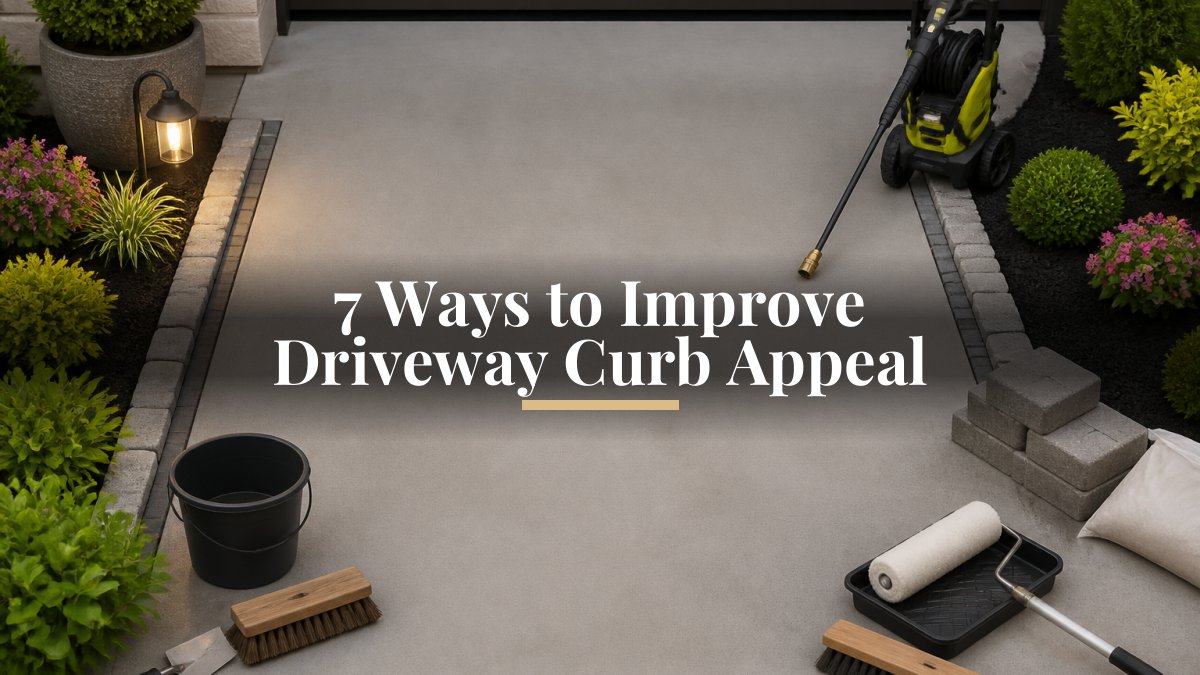
7 Ways to Improve Driveway Curb Appeal
Table of Contents
- 1. Clean and Pressure Wash Your Driveway
- 2. Repair Cracks and Surface Damage
- 3. Apply Concrete Driveway Sealing
- 4. Consider Concrete Driveway Resurfacing
- 5. Add Driveway Landscaping Ideas
- 6. Install Decorative Edging and Borders
- 7. Enhance With Outdoor Lighting and Hardscaping
- Frequently Asked Questions
Last Updated: October 9, 2026
1. Clean and Pressure Wash Your Driveway
The first step to improve driveway curb appeal is getting rid of dirt, grime, and stains that make your driveway look tired. A clean surface instantly transforms how your home's entrance looks.
Start with a basic sweep to remove loose debris. Then use a garden hose to rinse the surface. For stubborn stains or heavy buildup, pressure washing works best. This method blasts away years of accumulated dirt in minutes.
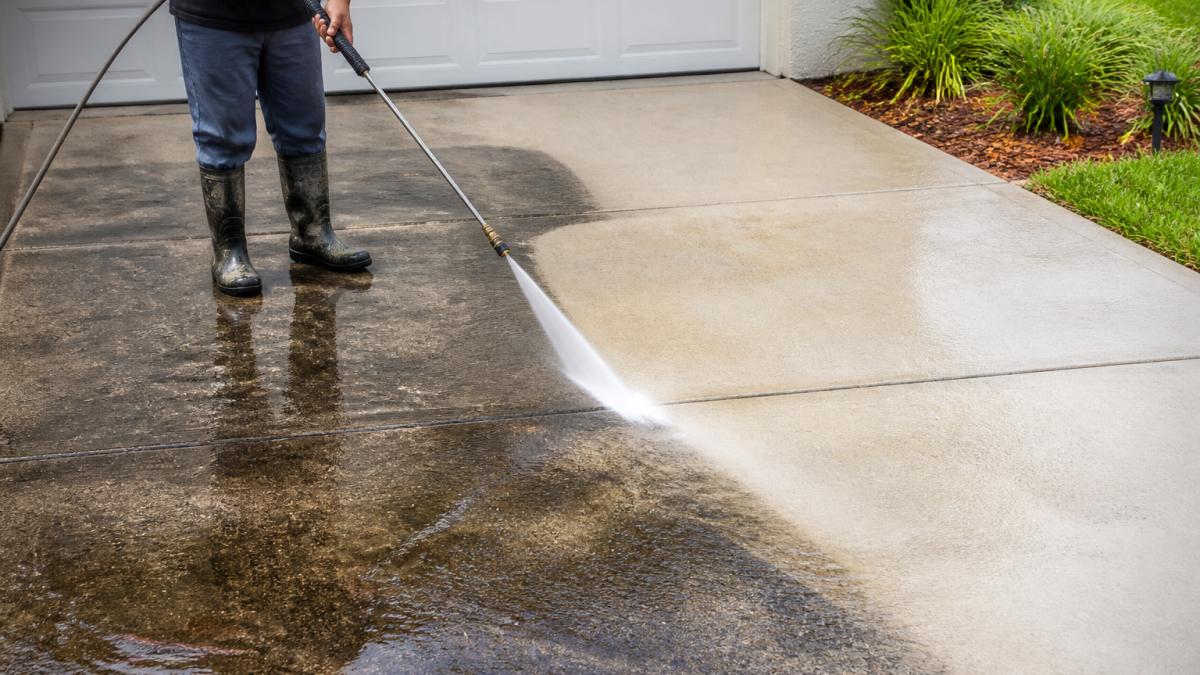
Pressure washing removes:
- Oil stains from vehicles
- Moss and algae growth
- Tire marks and scuffs
- Dirt and dust buildup
How to Clean Oil Stains From a Concrete Driveway
Oil stains are one of the most common driveway problems. They happen when vehicles leak fluid onto the concrete surface.
For fresh stains, act quickly. Sprinkle baking soda or cat litter on the spot to absorb the oil. Let it sit for a few hours, then sweep it up. For older, set-in stains, you'll need stronger action.
Try a degreaser product designed for concrete. Apply it according to the product instructions. Let it soak, then scrub with a stiff brush. Rinse thoroughly with water. Some stains may need multiple treatments.
Pressure washing at high pressure (3000+ PSI) can also remove oil stains. Direct the spray at an angle to push the stain out rather than deeper into the concrete.
2. Repair Cracks and Surface Damage
Cracks and damage make your driveway look neglected, even if it's otherwise clean. Small cracks get bigger over time as water seeps in and freezes. Fixing them early stops expensive damage later.
For hairline cracks (thinner than a dime), use concrete crack filler. Clean out the crack with a wire brush first. Apply the filler with a caulk gun, overfilling slightly. Smooth it with a putty knife. Once dry, sand it level with the surface.
For wider cracks (larger than 1/4 inch), concrete patching compound works better. This material is thicker and stronger than caulk. Follow the same cleaning step, then apply the patch according to product directions.
Larger sections of damage need more serious repair. Spalling (flaking concrete) or deep holes require professional assessment. This is where Concrete Renovations can help, our certified team evaluates damage and recommends the best repair approach for your specific situation.
Catching damage early:
- Prevents water infiltration
- Stops cracks from spreading
- Keeps repair costs down
- Improves safety and appearance
3. Apply Concrete Driveway Sealing
Sealing is the single highest-return maintenance step for a concrete driveway. It creates a sacrificial barrier that takes the abuse, water, UV, deicing salts, oil, so the concrete underneath doesn't have to. A sealed driveway holds its color, resists staining, and typically outlasts an unsealed one by years.
How sealing actually works. Concrete is porous. Water, dissolved salts, and oil migrate into those pores, then expand and contract with temperature swings. A sealer fills the surface pores and either coats the top (film-forming) or penetrates and chemically bonds inside them (penetrating).
Match the sealer to your climate. This is the step most guides skip:
- Freeze-thaw regions: Choose a penetrating silane/siloxane sealer. Film-formers trap moisture that then freezes and pops the coating off in sheets. Penetrating sealers let vapor escape while still blocking liquid water.
- Hot, high-UV regions: A UV-stable acrylic or polyurethane topcoat slows the sun bleaching that turns concrete chalky and gray. Reapply more often, sun exposure shortens sealer life.
- Coastal or salt-belt areas: Prioritize chloride resistance. Silane-based penetrating sealers outperform film-formers against salt intrusion.
DIY vs. professional application. A homeowner can seal a sound, clean driveway with a roller and a 5-gallon pail of sealer in an afternoon.
Timing and reapplication. New concrete needs to cure before sealing, most manufacturers specify waiting at least 28 days, and some recommend 90. After that, expect to reseal every 2-3 years in moderate climates, every 1-2 years under heavy sun, salt, or freeze-thaw.
What sealing will not fix. Sealer is a protectant, not a repair. It won't bridge structural cracks, hide spalling, or level a settled slab. Seal over active damage and you trap moisture and accelerate the failure. Repair first, then seal.
Benefits of concrete driveway sealing:
- Blocks liquid water while letting vapor escape (with penetrating sealers)
- Reduces oil, rust, and leaf-tannin staining
- Slows UV fading and surface chalking
- Extends service life and delays replacement
- Makes routine cleaning dramatically easier
4. Consider Concrete Driveway Resurfacing
Resurfacing, also called overlaying or re-topping, bonds a new layer of concrete or a polymer-modified overlay onto your existing slab.
When resurfacing is the right call, and when it isn't. Resurfacing works when the slab is structurally sound: no major settlement, no widespread alligator cracking, no heaving at the edges. It fails fast when the base is moving, because the new layer cracks right along with the old one.
What actually goes into a resurfacing job.
- Prep. The existing surface is pressure washed, then mechanically profiled, grinding, scarifying, or acid etching, so the overlay has something to bite into. Skipping this step is the number-one cause of delamination.
- Repair. Cracks are routed and filled, spalled areas are patched, and any hollow spots are addressed before the overlay goes down.
- Bond coat. A bonding agent or primer is applied while the surface is still damp, depending on the overlay system.
- Overlay. A polymer-modified cementitious overlay is troweled or sprayed on at roughly 1/4 to 1/2 inch thick. This is thinner than a new slab, which is why the base has to be solid.
- Cure and finish. The surface is finished, broom, stamped, or sprayed with a decorative texture, then cured for several days before vehicle traffic.
Decorative options that come free with resurfacing. Because you're already paying for a new top layer, this is the moment to add stamped patterns (herringbone brick, cobblestone, slate), integral color, or an exposed-aggregate finish. These upgrades cost far less as part of a resurfacing project than as a standalone decorative concrete job.
DIY vs. professional, the honest trade-off. Big-box stores sell roll-on resurfacer for a few hundred dollars, and it can work on a small, flat, crack-free slab. But the failure modes are unforgiving: poor prep, wrong mix consistency, or applying in direct sun causes peeling within a season.
Climate considerations.
- Freeze-thaw regions: Choose a polymer-modified overlay rated for freeze-thaw and make sure the slab drains. Water pooling at the edges will pop the overlay off in one or two winters.
- Hot, dry regions: Apply in cooler morning hours and keep the overlay damp during cure. Rapid drying causes shrinkage cracks that telegraph through the finish.
- Coastal areas: Specify a chloride-resistant overlay system and seal it more frequently.
Cost-to-value framing. Resurfacing typically runs well below the cost of a full replacement, and it can be completed in days rather than weeks.
When to consider resurfacing:
- Multiple surface cracks but a stable, level slab
- Widespread staining or surface spalling
- Chalky, faded concrete that no longer cleans up
- Desire for a stamped or colored finish without new concrete
- Base is solid and drainage is correct
5. Add Driveway Landscaping Ideas
Landscaping transforms your driveway from purely functional to genuinely attractive. Plants, flowers, and greenery frame your driveway and soften its hard edges.
Plant ornamental grasses along the edges of your driveway. These add movement and texture without requiring constant maintenance. Choose varieties suited to your climate for best results.
Add planting beds with colorful perennials near the driveway entrance. Flowers draw the eye and add visual interest. Seasonal blooms keep your curb appeal fresh throughout the year.
Consider a border of low shrubs. These define the driveway edge while creating a polished, intentional look. Boxwood, juniper, and similar plants work well in most climates.
Driveway landscaping ideas that work:
- Ornamental grasses for texture
- Flowering perennials for color
- Shrub borders for definition
- Ground cover plants for softness
- Potted plants for flexibility
6. Install Decorative Edging and Borders
Edging defines your driveway and adds polish to your home's exterior. It separates the driveway from landscaping and creates a finished, intentional appearance.
Metal edging offers a clean, modern look. Steel or aluminum borders come in various styles and finishes. They're durable and easy to install along the driveway perimeter.
Stone or brick edging creates a more traditional aesthetic. These materials blend with landscape features and add warmth to your driveway. They work well in varied design styles.
Concrete borders can be poured as part of resurfacing or repair work. Colored or stamped borders coordinate with your driveway surface while adding visual interest. This approach creates a cohesive, professional appearance.
Edging options for curb appeal:
- Metal borders for modern style
- Stone edging for traditional look
- Brick pavers for warmth
- Concrete borders for coordination
- Decorative curbing for definition
7. Enhance With Outdoor Lighting and Hardscaping
Lighting transforms your driveway from day to night. Well-placed lights improve safety while creating an inviting atmosphere.
Install uplights to highlight landscape features along your driveway. These accent lights draw attention to plants and hardscaping elements. Solar options require no wiring and work automatically at dusk.
Path lights along the driveway edge guide visitors safely. They also add visual interest and define the driveway boundaries. Low-voltage LED lights use minimal energy while providing adequate illumination.
Consider accent lighting on your home's facade. This draws attention to your entrance and creates curb appeal after dark. Spotlights or wall-mounted fixtures work well for this purpose.
Hardscaping complements your driveway and landscape. Stone walkways, stepping stones, or gravel paths create visual flow. These elements connect your driveway to other outdoor spaces.
Lighting and hardscaping additions:
- Uplights for landscape features
- Path lights for safety and definition
- Accent lighting on home exterior
- Stone walkways for visual flow
- Decorative gravel or mulch borders
Improving your driveway's curb appeal doesn't require replacing the entire surface. Often, strategic cleaning, repairs, and enhancements deliver dramatic results. At Concrete Renovations, we've helped homeowners transform their driveways through professional sealing, resurfacing, and expert repairs. Our certified team handles everything from pressure washing to complete driveway restoration with a one-year warranty on all workmanship. Whether you need basic maintenance or major upgrades, we provide free estimates and competitive pricing to help you achieve the driveway you want. Get a quote from Concrete Renovations today and see how we can enhance your home's entrance.
Frequently Asked Questions
What is the cheapest way to improve my driveway's curb appeal?
Pressure washing and cleaning are the most affordable starting points. A thorough cleaning removes dirt, algae, and stains that age your driveway, often costing far less than repairs or resurfacing. Sealing after cleaning protects your investment and enhances appearance for a modest additional expense. For budget-conscious homeowners, these two steps deliver significant visual impact before considering costlier upgrades like resurfacing or landscaping.
How do you clean oil stains from a concrete driveway?
Fresh oil stains respond to degreaser and a stiff brush; let the degreaser sit for 15-30 minutes before scrubbing and rinsing thoroughly. Set-in stains may require a poultice (absorbent powder mixed with solvent) left overnight to draw oil from deep pores. Pressure washing at 3000+ PSI helps remove loosened residue. For stubborn stains, professional cleaning equipment and specialized treatments work best. Sealing your driveway afterward prevents future oil penetration.
Should I seal my concrete driveway to improve its appearance?
Yes, sealing enhances appearance by deepening the concrete color, restoring shine, and creating a uniform finish. Beyond aesthetics, sealers protect against moisture, salt, and UV damage, extending your driveway's lifespan and reducing maintenance. A sealed driveway resists stains, requires less frequent cleaning, and maintains its polished look longer. Resealing every 2-3 years keeps both protection and visual appeal at their peak.
Can landscaping really improve driveway curb appeal?
Absolutely. Strategic plantings, ornamental grasses, and flower beds frame your driveway and soften hard edges, creating visual balance. Landscape borders define the driveway's edges and add depth to your front yard. Trees and shrubs provide scale and shade, while low-maintenance plants reduce upkeep. Thoughtful softscape design transforms a plain concrete slab into an integrated part of your home's exterior, significantly boosting overall curb appeal and property perception.