 Comparison
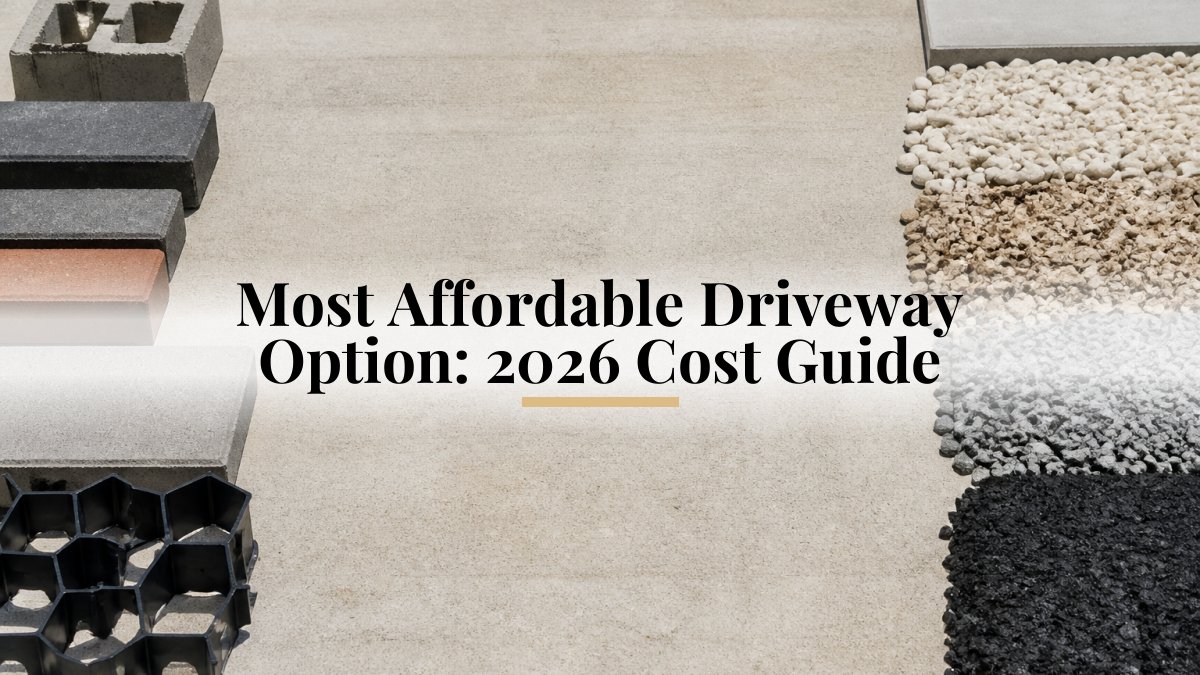
Most Affordable Driveway Option: 2026 Cost Guide
Table of Contents
- Gravel Driveway: The Most Affordable Option
- Driveway Material Types and Cost Comparison
- Asphalt vs. Concrete Driveway Cost
- Driveway Installation Cost Factors
- Driveway Maintenance Requirements and Long-Term Cost
- Hidden Costs and Total Cost of Ownership
- How to Get an Accurate Quote and Avoid Overpaying
- Frequently Asked Questions
Last Updated: October 18, 2026
Gravel Driveway: The Most Affordable Option
When homeowners ask what is the most affordable driveway option, gravel consistently ranks at the bottom of the price list, delivering the lowest upfront material and installation costs compared to asphalt or concrete.
Gravel driveways use loose crushed stone or aggregate as the wearing surface. According to Angi's comprehensive driveway cost guide, gravel typically costs between $1.25 and $1.80 per square foot for installation, with average total project costs ranging from $800 to $1,110 for a standard residential driveway.
The appeal is straightforward: a usable driveway surface for a fraction of what asphalt or concrete demand. But affordability comes with trade-offs, regular maintenance, migration across your property line, and periodic replenishment.
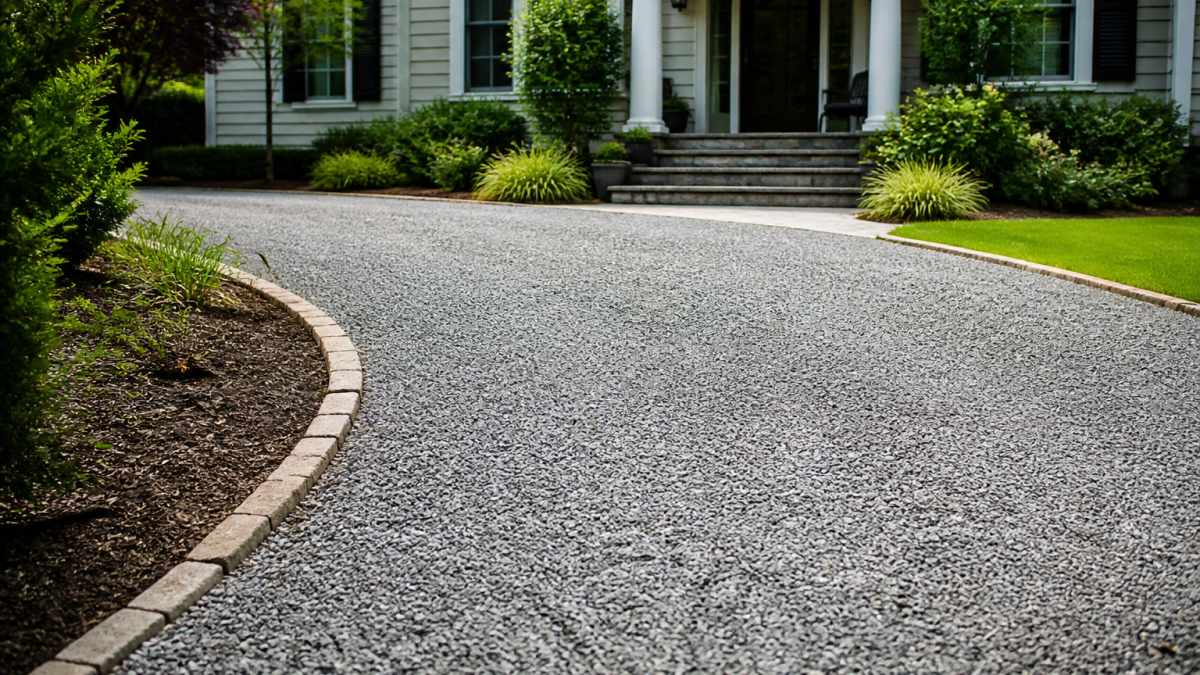
At Concrete Renovations, we've helped homeowners evaluate driveway options based on budget and long-term maintenance tolerance. While we specialize in concrete and asphalt, we understand why budget-conscious homeowners explore gravel first.
Driveway Material Types and Cost Comparison
The most affordable driveway option sits within a spectrum of choices, each with distinct price points and performance. A like-for-like comparison reveals where gravel fits and where spending slightly more delivers better value.
| Material | Upfront Cost Range | Expected Lifespan | Maintenance Cadence | Drainage | Best For | Key Trade-off |
|---|---|---|---|---|---|---|
| Gravel | $1.25-$1.80/sq ft | 10-20 years with replenishment | Replenish every 1-2 years; regrade seasonally | Excellent (loose aggregate) | Lowest budget, rural or long driveways | Migration, dust, frequent topping off |
| Crushed Stone / RCA | Similar to gravel | 10-20 years with replenishment | Replenish every 2-3 years | Excellent | Budget-conscious, drainage priority | Loose surface, displacement, dust |
| Asphalt | $8-$15/sq ft | 15-20 years | Seal every 2-3 years; crack fill as needed | Good when sloped and sealed | Paved surface on a moderate budget | Resealing cost, heat sensitivity |
| Concrete | $10-$25/sq ft | 25-40 years | Cleaning and crack repair only | Fair to good (joints, slope) | Long-term durability, curb appeal | Highest upfront cost, joint maintenance |
Gravel and crushed stone occupy the budget tier, asphalt bridges economy and durability, and concrete sits at the premium end with decades of minimal-upkeep service. The comparison only becomes meaningful when lifespan and maintenance are weighed alongside sticker price, a material costing one-eighth as much upfront but needing replenishment every other year can close the gap over a decade.
Crushed Stone and Recycled Aggregate
Crushed stone functions similarly to gravel but often comes from recycled concrete aggregate (RCA), which offers environmental benefits and performs comparably to virgin gravel. The cost difference is negligible; both fall within the most affordable driveway option category.
RCA compacts well, drains well, and is often sourced locally, reducing delivery costs. Like gravel, it remains a loose surface prone to displacement and dust, and you'll still add fresh stone every 2-3 years. Quality varies by source, ask whether the material has been screened and graded for driveway use, since poorly graded RCA can contain fines that hold water and turn to mud.
How to Read the Comparison Like a Contractor
Three columns do the most work when you compare materials honestly:
- Lifespan with normal maintenance. A gravel driveway is a surface you renew; concrete is closer to a one-time purchase with occasional crack repair.
- Maintenance cadence. Frequency matters more than any single repair bill. Annual replenishment on a long gravel drive can add up faster than a seal coat every few years on asphalt.
- Drainage behavior on your site. Loose aggregate sheds water well on slopes but ruts where water pools. Paved surfaces depend on grading and joints.
Use the table as a starting filter, then confirm numbers against quotes for your actual dimensions, a material that looks cheapest per square foot can lose its advantage once delivery, edging, and site prep are added.
Asphalt vs. Concrete Driveway Cost
Once you move beyond gravel, the next step up is asphalt. According to This Old House's driveway surface guide, asphalt costs between $8 and $15 per square foot installed, making it roughly 5-8 times more expensive than gravel upfront.
Concrete runs higher still, typically $10 to $25 per square foot. The price gap reflects the durability difference: concrete lasts 25-40 years with minimal maintenance, while asphalt needs resealing every 2-3 years and typically lasts 15-20 years.
The most affordable driveway option remains gravel if you're measuring only initial expense. But asphalt offers a middle ground, a paved surface costing less than concrete and requiring less maintenance than gravel. For homeowners who can spend moderately more upfront, asphalt often delivers better long-term value than perpetually refreshing a gravel surface.
Driveway Installation Cost Factors
Installation cost depends on several variables beyond material price. Understanding them prevents budget surprises and helps you evaluate contractor quotes accurately.
Site Preparation and Base Layer Requirements
Before any surface material is placed, the subgrade must be prepared. This involves excavation, grading, and compaction of the base layer. For gravel driveways, a 4-6 inch compacted base of crushed stone or recycled aggregate is standard practice.
Site prep costs vary by existing conditions. A level lot with good drainage requires minimal work; sloped terrain, poor drainage, or soft soil increases labor and material costs.
For the most affordable driveway option, site prep remains a fixed cost regardless of material choice. Gravel doesn't eliminate this expense, it only reduces the cost of the wearing surface itself. Factoring in site prep gives a more realistic total project cost than material price alone.
Drainage, Soil, and Climate Suitability
Drainage determines how long your driveway lasts. Poor drainage causes gravel to migrate, asphalt to crack, and concrete to heave or settle unevenly.
Soil composition matters. Clay-heavy soils retain water and shift with freeze-thaw cycles; sandy soils drain quickly but offer less structural support. Gravel performs acceptably on well-draining soils but struggles where water pools.
Climate impacts maintenance frequency. Wet regions demand more frequent gravel replenishment, freeze-thaw cycles accelerate damage to all types, and arid climates make gravel dust a nuisance.
The most affordable driveway option for your property depends partly on site conditions. A gravel driveway on well-draining soil in a dry climate might outperform an asphalt driveway in a wet, freeze-thaw zone. Evaluating your specific conditions prevents costly mistakes.
Driveway Maintenance Requirements and Long-Term Cost
Gravel's low upfront cost masks higher maintenance demands. To see whether it is truly the most affordable driveway option, compare total cost of ownership over a defined period, installation, repairs, replenishment, and maintenance combined.
What Each Surface Actually Requires
Gravel needs fresh material every one to two years depending on traffic and climate. Dust control may require stabilizers or watering, edging must be maintained, and pothole repair means adding stone and regrading. On a 600-square-foot drive, a typical replenishment load runs several tons of stone plus delivery, and that cost recurs.
Asphalt requires sealing every two to three years to prevent oxidation and water penetration, plus prompt crack filling to prevent expansion damage.
Concrete needs occasional cleaning and crack repair but no sealing or replenishment; stains are cosmetic. Over 30 years, concrete's maintenance cost is substantially lower than gravel's cumulative replenishment.
A Defined-Period Total Cost of Ownership Comparison
Rather than comparing sticker prices, build a ten-year budget for a standard 600-square-foot residential driveway. The figures below use typical ranges and should be replaced with local quotes; they are illustrative, not a bid.
| Cost Category | Gravel | Asphalt | Concrete |
|---|---|---|---|
| Installation (upfront) | Lowest of the three | Mid-range | Highest of the three |
| Replenishment / resealing over 10 years | Recurring stone and delivery every 1-2 years | Seal coat every 2-3 years | None required |
| Routine repair | Regrading, pothole patching, edging upkeep | Crack filling, patching | Occasional crack repair |
| Dust control / stabilization | Ongoing in dry climates | Not applicable | Not applicable |
| Expected remaining life at year 10 | Mid-life, still renewable | Mid-life | Well within service life |
Most homeowners find gravel wins decisively on day one and narrows its advantage over a decade, while concrete's higher upfront cost is offset by near-zero recurring maintenance. Asphalt lands in the middle on both axes.
Maintenance Realities That Change the Math
- Traffic intensity. A gravel drive serving two vehicles daily holds up far better than one serving a work truck and trailer; high-traffic gravel fails faster and needs more frequent replenishment.
- Climate. Wet regions accelerate gravel migration and asphalt oxidation, freeze-thaw cycles hit loose aggregate and unsealed asphalt hardest, and arid climates make gravel dust a persistent nuisance.
- Drainage and slope. A well-graded, sloped gravel drive sheds water and lasts longer; a flat, poorly drained drive turns to ruts and potholes regardless of material quality.
- Edging and containment. Gravel without proper edging migrates into lawns and storm drains, creating replacement cost and potential runoff compliance issues.
The most affordable driveway option is not a single material, it is the material whose ten-year total cost fits your budget and maintenance tolerance. Homeowners who will not replenish gravel annually should price asphalt or concrete before committing.
Hidden Costs and Total Cost of Ownership
The most affordable driveway option on day one might be expensive over time. Hidden costs often appear after installation.
Permitting and local requirements: Some jurisdictions require permits for driveway work or restrict material types. Check local codes before budgeting.
Delivery fees: Delivery cost varies by distance and quantity.
Equipment rental: DIY installation requires renting a compactor, grader, or roller; professional quotes include this.
Edging materials: Steel, plastic, or stone edging adds material and labor cost.
Dust control and stabilization: In dusty climates, chemical stabilizers or regular watering become ongoing expenses.
Repair and replacement: Gravel fails faster in high-traffic areas, and replacing a failed section costs nearly as much as the original installation.
These hidden costs shift the calculation.
How to Get an Accurate Quote and Avoid Overpaying
Getting an accurate quote requires detailed site information and understanding what's included in each estimate.
Provide precise measurements: Measure length, width, and any slopes so contractors can estimate material volume and labor accurately.
Disclose site conditions: Mention drainage issues, soil type, slope, and whether material removal is needed, these significantly affect cost.
Ask about maintenance: Request a maintenance schedule and estimated annual cost to reveal the true long-term expense.
Verify insurance and licensing: Confirm the contractor is licensed and insured.
Get multiple quotes: Obtain at least three quotes and compare price, scope, and warranty terms.
Choosing the most affordable driveway option requires balancing upfront cost, maintenance demands, and long-term durability.
At Concrete Renovations, we help homeowners make informed decisions about driveway materials based on their budget, site conditions, and timeline.
Get a quote from Concrete Renovations today to explore driveway options tailored to your property and budget.
Frequently Asked Questions
What is the least expensive type of driveway?
Gravel is the least expensive driveway material based on upfront cost per square foot. Loose gravel driveways offer good drainage and require minimal site preparation compared to paved surfaces. However, gravel requires regular replenishment and maintenance to prevent rutting and dust. Crushed stone is a similar budget-friendly alternative that may hold its shape slightly better than loose gravel but still needs periodic care.
Is gravel cheaper than asphalt for a driveway?
Yes, gravel is typically cheaper than asphalt for initial installation. Gravel costs significantly less per square foot upfront, making it ideal for homeowners prioritizing lowest immediate expense. Asphalt costs more to install but requires less frequent maintenance than gravel in the short term. Over several years, total maintenance costs may shift this comparison, depending on climate and how often you refresh the gravel surface.
How much does driveway installation cost, and what factors affect the price?
Driveway installation cost depends on material choice, site preparation needs, driveway size, delivery distance, and labor rates in your area. Gravel requires minimal preparation; paved surfaces like asphalt and concrete need excavation, base layer compaction, and grading. Drainage challenges, poor soil conditions, or steep slopes increase site preparation costs. Contractor experience and local market rates also influence the final quote. Always request itemized estimates that break down material, labor, and delivery separately.
What maintenance does each driveway material require?
Gravel driveways need regular raking, replenishment every 2-3 years, and weed control. Asphalt requires seal coating every few years and patching of cracks to prevent water infiltration. Concrete needs periodic cleaning and crack sealing but generally requires less frequent maintenance than asphalt or gravel. Crushed stone falls between gravel and asphalt in maintenance demands. Budget for ongoing upkeep when comparing affordable driveway options over time.