 Listicle
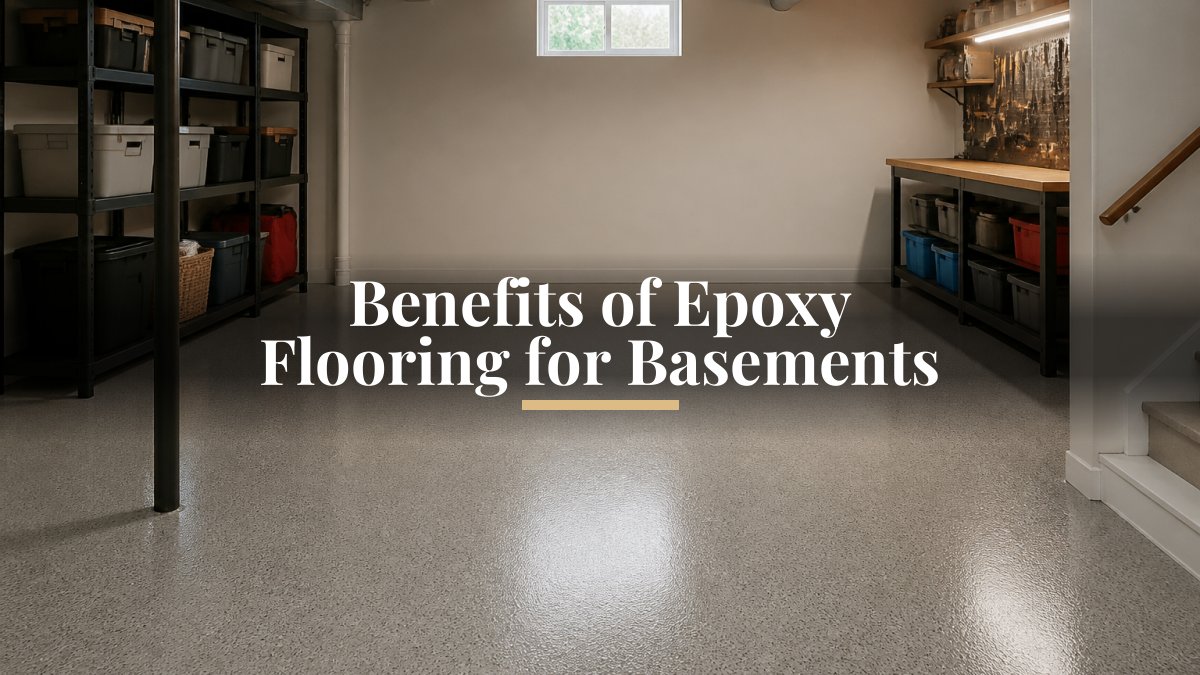
Benefits of Epoxy Flooring for Basements
Table of Contents
- Why Epoxy Flooring Works for Basement Environments
- Epoxy Basement Floor Pros and Cons
- How to Prepare a Concrete Basement Floor for Epoxy
- Epoxy Floor Maintenance and Long-Term Care
- Epoxy vs. Polished Concrete for Basement Floors
- When Epoxy Reaches Its Limits
- Transform Your Basement with Professional Epoxy Flooring
- Frequently Asked Questions
Last Updated: October 17, 2026
Why Epoxy Flooring Works for Basement Environments
Epoxy flooring is a durable, moisture-resistant coating system applied over concrete that transforms basement floors into long-lasting, easy-to-maintain surfaces, and understanding the benefits of epoxy flooring for basements helps homeowners make informed decisions about their spaces. At Concrete Renovations, we've seen firsthand how the right floor coating addresses the unique challenges basements present: dampness, temperature swings, and heavy foot traffic.
Basements face pressures that above-ground floors don't. Water vapor rises through concrete slabs from the ground below. Temperature changes cause concrete to expand and contract. These movements can crack paint, warp wood, and create conditions where mold thrives. Epoxy flooring for basements works because it bonds directly to the concrete, flexes slightly with seasonal shifts, and resists the moisture that causes other coatings to fail.
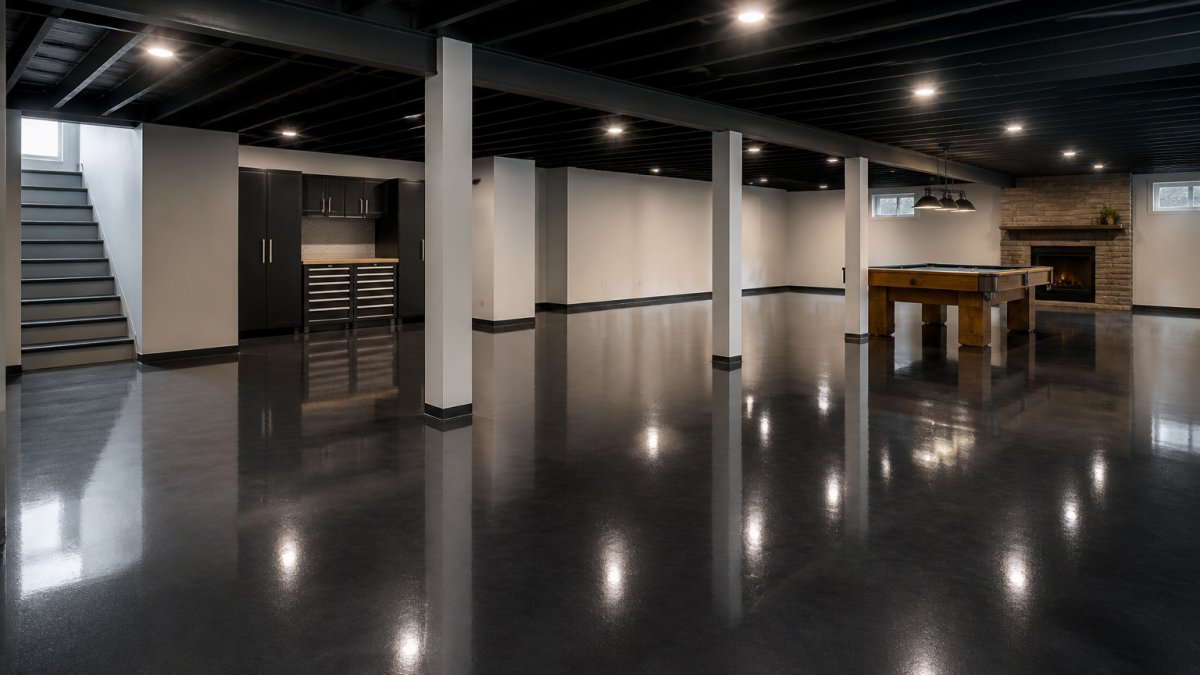
The coating creates a sealed surface that stops dust from rising off bare concrete. It resists stains from oil, chemicals, and water. The glossy finish reflects light, making dim basements feel brighter. For homeowners and commercial property managers, this means a finished-looking space that performs under real basement conditions.
Epoxy Basement Floor Pros and Cons
Key Advantages
Epoxy flooring for basements delivers several real benefits that explain its popularity for both residential and commercial spaces.
Moisture and water resistance is the headline advantage. Epoxy forms a seamless barrier that stops moisture vapor from rising through the concrete. Unlike paint or stain, which can bubble and peel when water pressure builds beneath them, epoxy flexes and holds.
Durability and resistance to wear is substantial. Epoxy withstands foot traffic, rolling equipment, and dropped tools without chipping or cracking. The surface doesn't scratch easily, and when it does, scratches don't spread or trap dirt.
Mold and mildew resistance follows from the moisture barrier. Mold needs moisture and organic material to grow. Epoxy removes the moisture pathway and creates a non-porous surface that mold cannot penetrate. This is especially valuable in basements that have struggled with mold in the past.
Easy cleaning and maintenance saves time and money. The smooth, non-porous surface wipes clean with a damp mop. Spills don't soak in. Dust doesn't accumulate in cracks. For commercial spaces, this translates to lower maintenance labor costs. For homes, it means a basement that stays clean without constant effort.
Appearance and decorative options let you customize the space. Epoxy comes in solid colors, metallic finishes, and flake patterns that hide dust and imperfections. You can add color chips for a speckled look or choose a high-gloss finish that makes the space feel larger and brighter.
Realistic Limitations
Epoxy flooring for basements isn't a universal fix. Understanding its limits helps you decide whether it's right for your situation.
Active water intrusion defeats epoxy. If water is actively seeping or pooling in your basement, epoxy will fail. The coating can't seal a foundation that's letting water through. Water gets trapped between the epoxy and the concrete, creating blisters and delamination.
Preparation is demanding and non-negotiable. The concrete surface must be perfectly clean, dry, and properly profiled (roughened) for epoxy to bond. Dust, dirt, old coatings, or moisture underneath will cause the epoxy to peel within months. This preparation step is where most DIY jobs fail and where professional experience matters.
Moisture testing must happen before application. Concrete can feel dry to the touch but still contain moisture trapped inside. A calcium chloride or relative humidity test reveals whether the concrete is truly ready. Many contractors skip this step to save time. The result is epoxy that fails within a year.
Cost and timeline require planning. Epoxy isn't a quick weekend project. Proper installation takes time: surface prep, moisture testing, primer application, multiple epoxy coats, and curing time between each layer. The total timeline is typically measured in days, not hours.
Repair and recoating have limits. Once epoxy is down, patching a damaged section is visible. You can't just paint over a problem spot, the patch will show. Recoating the entire floor is the professional solution, but it's an investment.
How to Prepare a Concrete Basement Floor for Epoxy
Understanding the benefits of epoxy flooring for basements makes clear that success starts before the first coat goes down. Preparation determines whether the floor lasts five years or fifteen.
Moisture Testing Before Application
Before any epoxy touches the concrete, you must know whether moisture is present. Concrete can trap water deep inside while the surface feels bone-dry.
Two standard tests reveal the truth. A calcium chloride test measures moisture vapor emission from the concrete. A relative humidity (RH) test measures the moisture level inside the concrete itself. Most professionals use RH testing because it's more accurate for epoxy applications. The concrete should measure below 75% relative humidity before epoxy is applied. Above that threshold, moisture will cause the coating to fail.
Testing takes a day or two and costs far less than replacing a failed floor. It's the single most important step you can take to protect your investment.
Surface Preparation Steps
Once moisture testing confirms the concrete is ready, surface preparation begins.
Step 1: Remove existing coatings. If the concrete has old paint, sealer, or coating, it must go. Grinding, shot blasting, or chemical stripping removes the old layer down to bare concrete. This exposes the concrete surface so epoxy can bond.
Step 2: Repair cracks and damage. Small cracks (hairline to 1/8 inch) can be sealed with epoxy primer. Larger cracks need concrete repair compound or epoxy injection to prevent them from spreading under the new coating. Fill holes and divots so the surface is even.
Step 3: Clean thoroughly. Dust, dirt, and debris prevent epoxy from bonding. Vacuum the entire floor, then wash with a degreaser to remove oils and residue. Rinse completely and allow to dry.
Step 4: Profile the surface. The concrete needs to be slightly rough so epoxy can grip it mechanically. Light grinding or acid etching creates this profile. The surface should feel like fine sandpaper, not smooth.
Step 5: Final inspection. Walk the floor and look for missed spots, remaining dust, or areas that need additional work. Any imperfection now will show through the epoxy later.
Epoxy Floor Maintenance and Long-Term Care
Once your epoxy basement floor is installed, maintenance is straightforward but consistent.
Daily and weekly care is simple. Sweep or vacuum to remove dust and debris. Mop with a damp cloth and mild detergent if needed. Wipe spills immediately so they don't sit and potentially stain or etch the surface. This routine keeps the floor clean and extends its life.
Avoid harsh chemicals that can damage the epoxy. Acidic cleaners, solvents, and abrasive scrubbers can dull the finish or create dull spots. Stick to pH-neutral cleaners designed for epoxy floors.
Inspect periodically for signs of wear or damage. Small scratches are cosmetic and don't affect performance. Larger chips or areas where the epoxy is peeling need attention. Minor damage can be touched up; widespread failure means the floor needs recoating.
Recoating becomes relevant after 5-10 years of heavy use, depending on traffic and maintenance. A fresh topcoat restores the gloss and extends the floor's life another several years. This is far cheaper than removing and replacing the entire floor.
Epoxy vs. Polished Concrete for Basement Floors
Both epoxy and polished concrete improve basement floors, but they work differently and suit different situations.
Polished concrete is concrete that's been mechanically ground and sealed to create a smooth, glossy surface. It's durable and low-maintenance. The process doesn't involve coating, it's a mechanical refinement of the concrete itself.
Epoxy flooring for basements is a coating applied on top of concrete. The epoxy is what you see and walk on, not the concrete beneath.
The key difference is moisture performance. Epoxy seals the concrete completely, stopping moisture vapor from rising through the surface. Polished concrete, even with sealer, allows some moisture transmission. In a damp basement, epoxy is more reliable. Polished concrete works better in basements that are already dry and will remain dry.
Epoxy also offers more decorative options: colors, flakes, metallic effects. Polished concrete has a more minimalist look, the concrete itself, refined and sealed.
Cost and installation time are similar for both. The choice depends on your basement's moisture level and the aesthetic you prefer. If moisture is a concern, epoxy is the safer choice. If the space is dry and you want a modern, industrial look, polished concrete is an option.
When Epoxy Reaches Its Limits
Epoxy flooring for basements solves many problems, but it's not a cure-all for every basement situation.
Basements with active water intrusion need a different approach. Water seeping through walls or pooling on the floor means the foundation has a moisture problem that epoxy can't fix. Waterproofing the foundation, interior or exterior drainage, sump pumps, or exterior sealant, must come first. Only after the water is controlled should epoxy be considered.
Basements with poor ventilation may still experience mold on walls and framing even with an epoxy floor. Epoxy protects the floor but doesn't address airflow or humidity in the overall space. Adding a dehumidifier or improving ventilation handles that part of the problem.
Extremely heavy industrial use with constant chemical exposure may require specialized coatings beyond standard epoxy. Commercial kitchens, laboratories, or facilities with aggressive cleaning chemicals need consultation on epoxy type and thickness.
Budget constraints sometimes mean epoxy isn't the right choice now. A sealed concrete floor or temporary coating might buy time until resources are available for proper epoxy installation.
Transform Your Basement with Professional Epoxy Flooring
A basement with a finished epoxy floor feels like usable space instead of a storage area. The floor is clean, durable, and built to handle moisture, the one challenge basements always face.
The difference between a successful epoxy floor and one that fails within a year comes down to preparation and professional execution. Moisture testing, proper surface prep, and correct application are non-negotiable. This is where cutting corners costs you far more than you save.
At Concrete Renovations, we handle every step: moisture testing, surface preparation, epoxy application, and curing. Our certified team brings over 50 years of combined experience to ensure your basement floor is done right. We stand behind our work with a one-year warranty on all workmanship, and we provide free estimates so you know exactly what to expect. Whether your basement needs protection from moisture, improved appearance, or a durable surface for heavy use, epoxy flooring delivers real results.
Get a quote from Concrete Renovations today and see how epoxy flooring can transform your basement into a space that lasts.
A finished basement starts with a floor that works. Epoxy flooring handles the moisture, durability, and appearance challenges that other coatings can't. Concrete Renovations brings certified expertise, thorough preparation, competitive pricing, and a one-year warranty to every project. When you're ready to upgrade your basement, get in touch for a free estimate and discover why proper epoxy flooring is an investment that pays back in years of reliable performance.
Frequently Asked Questions
What are the main benefits of epoxy flooring for basements?
Epoxy flooring creates a waterproof seal over concrete, resisting moisture, mold, and mildew that commonly plague basements. It's highly durable, standing up to foot traffic and chemical spills, while offering a polished, finished appearance that increases property value. The coating also reduces dust from concrete, improves lighting through its reflective surface, and requires minimal maintenance compared to bare concrete.
Can epoxy flooring handle moisture in a basement?
Epoxy provides excellent moisture resistance when properly applied to well-prepared concrete. However, it cannot stop active water intrusion from hydrostatic pressure or groundwater seepage. Before epoxy application, moisture testing determines whether your basement is suitable for coating. If water is actively entering, drainage and waterproofing solutions must be addressed first, epoxy protects the concrete surface but isn't a substitute for managing water at its source.
How long does epoxy basement flooring last?
Quality epoxy flooring typically lasts 5-10 years in residential basements, with proper maintenance extending that lifespan. Commercial or heavy-traffic spaces may see shorter durability. Longevity depends on concrete preparation, application quality, moisture conditions, and how well you maintain the surface. Professional installation and regular cleaning significantly improve durability and appearance over time.
What's the difference between epoxy and polished concrete for basements?
Polished concrete is a mechanical process that hones the concrete surface, creating a smooth finish without a coating. Epoxy is a chemical coating applied over concrete. Epoxy offers superior moisture resistance, mold prevention, and stain protection, making it better for damp basements. Polished concrete offers less protection and can still absorb moisture. For basements specifically, epoxy's waterproof properties make it the more practical choice.