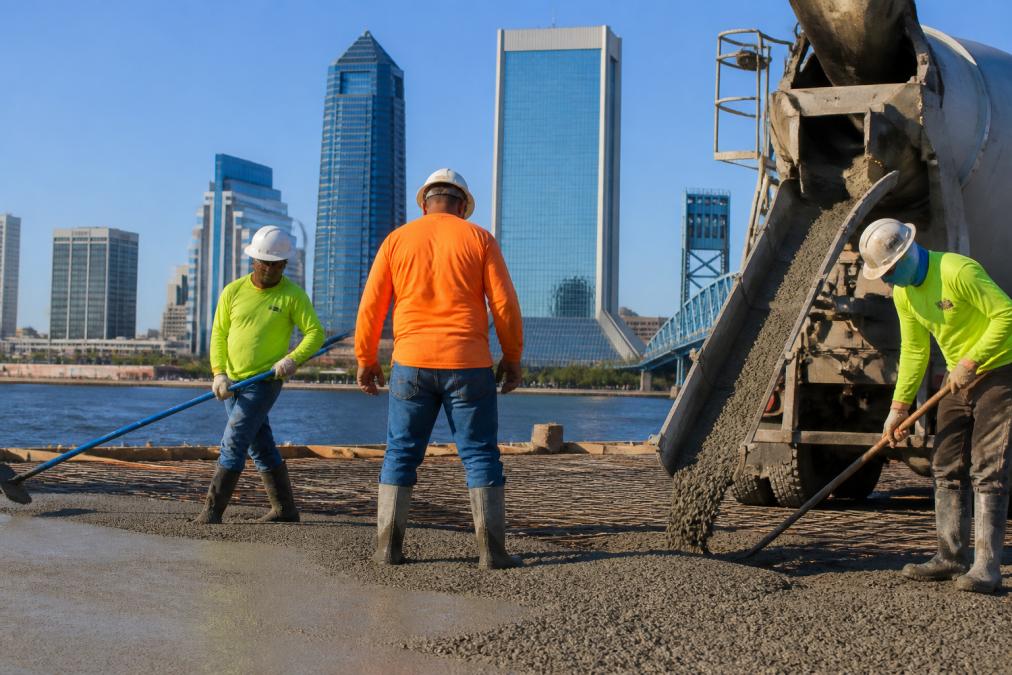
 listicle
Concrete Companies in Jacksonville: What to Know
Table of Contents
- What Concrete Companies in Jacksonville Offer
- Residential Concrete Services and Driveway Installation
- Commercial Concrete Solutions for Heavy-Duty Applications
- Hiring a Licensed Concrete Contractor: What You Need to Verify
- Concrete Slab Installation Cost Factors and Project Timeline
- Concrete Repair, Maintenance, and Long-Term Protection
- Why Workmanship Warranty and Insurance Matter
- Conclusion
- Frequently Asked Questions
Last Updated: September 23, 2026
What Concrete Companies in Jacksonville Offer
When you're planning a concrete project, whether it's a new driveway, a commercial warehouse floor, or foundation work, choosing among concrete companies Jacksonville offers is one of the most important decisions you'll make. The difference between hiring an experienced contractor and picking the wrong one can cost thousands in repairs down the road.
Concrete companies in the area offer a range of services that extend far beyond pouring a basic slab. They handle residential driveways, commercial flooring systems, decorative finishes, repairs, and ongoing maintenance. The best contractors combine technical expertise with a commitment to quality workmanship and customer service.
The right contractor will assess your site conditions, explain the process clearly, and stand behind their work with a warranty.
Residential Concrete Services and Driveway Installation
Your driveway is one of the first things people notice about your home. A well-installed concrete driveway increases curb appeal and can add measurable value to your property. Residential concrete services typically include new driveway installation, patio construction, walkways, and decorative finishes like stamped concrete.
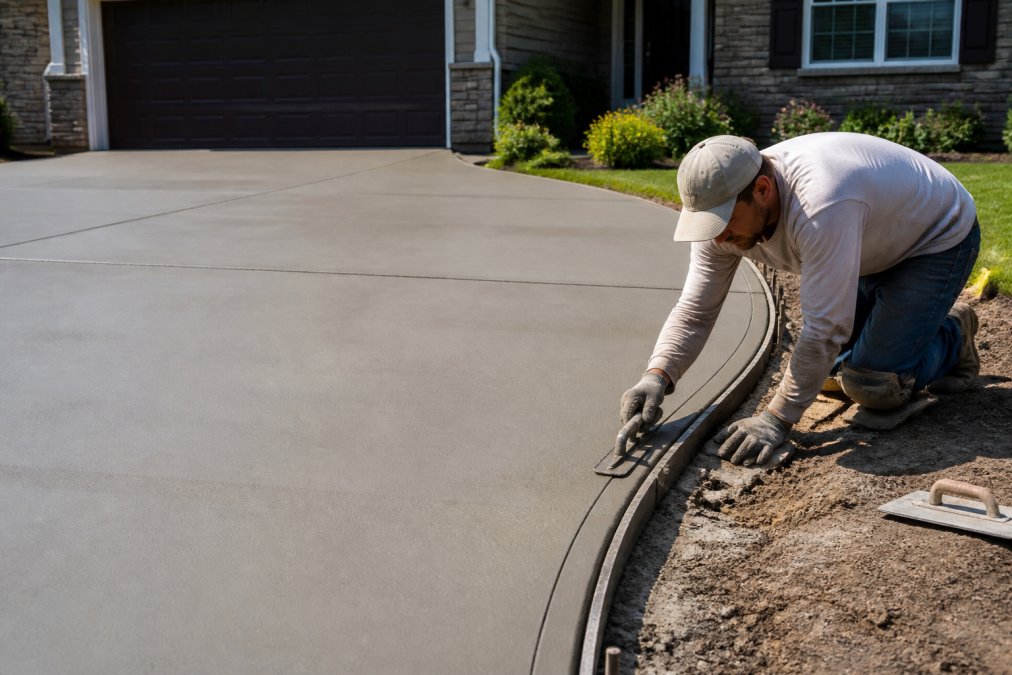
Most homeowners don't realize that proper site preparation determines whether a driveway lasts. The subgrade must be compacted correctly, drainage must slope away from the foundation, and the concrete mix needs to match your climate. Contractors who skip these steps save money upfront, and their customers pay for it later with settling, cracking, and costly repairs.
When evaluating residential contractors, ask about their finishing process. Do they hand-finish the surface or use mechanical equipment? How do they handle control joints to minimize cracking? A contractor who can explain their approach in detail is one who understands the craft.
Stamped concrete and decorative finishes have become popular for patios and pool decks. Quality stamped concrete work requires skill and experience, poor execution shows immediately in uneven patterns and color variations.
Commercial Concrete Solutions for Heavy-Duty Applications
Commercial concrete demands different specifications than residential work. A warehouse floor must handle heavy equipment traffic, chemical exposure, and constant movement. A retail space needs a polished, professional appearance that withstands foot traffic and occasional spills.
Commercial concrete services include industrial flooring systems, foundation work for new construction, concrete slabs for storage facilities, and structural concrete for large projects. Many commercial clients also need ADA-compliant accessibility upgrades, which require precise specifications and code compliance.
Epoxy flooring systems are standard in commercial spaces because they provide durability, chemical resistance, and easy maintenance. A properly installed epoxy floor can handle forklift traffic, oil spills, and heavy use without peeling or degrading. The key is proper surface preparation, if the concrete subgrade isn't cleaned and primed correctly, even premium epoxy will fail within months.
Contractors who specialize in commercial work understand building codes, permitting requirements, and the importance of scheduling projects around business operations. They know how to manage large crews, coordinate with other trades, and keep projects moving on timeline.
Hiring a Licensed Concrete Contractor: What You Need to Verify
This is where most homeowners and business owners make costly mistakes. A contractor with a truck and a shovel isn't the same as a licensed, insured professional. Before you sign anything, verify three critical things.
First, confirm licensing and insurance. Ask for proof of a current contractor's license and general liability insurance. A legitimate contractor will provide this without hesitation. Insurance protects you if someone is injured on your property or if the work causes damage. An uninsured contractor who causes injury or property damage leaves you personally liable.
Second, check references and past work. Ask the contractor for at least three recent projects similar to yours. Contact those clients and ask specific questions: Did the work finish on time? Did the contractor communicate clearly? Were there any issues after completion? A contractor confident in their work welcomes these conversations.
Third, understand the warranty. What exactly does the contractor guarantee, and for how long? Concrete Renovations backs all workmanship with a one-year warranty, which means we return and fix any issues that arise from our installation. Some contractors offer no warranty at all, that's a red flag.
Ask the contractor about their experience with local building codes and permitting. Different areas have different requirements for concrete thickness, reinforcement, and drainage. A contractor familiar with local standards will handle permits correctly and avoid costly corrections.
Concrete Slab Installation Cost Factors and Project Timeline
Understanding what drives concrete costs helps you evaluate quotes fairly and avoid sticker shock.
Square Footage and Base Rate Most contractors price concrete by the square foot, depending on local labor costs and material availability. Commercial work often costs more due to stricter specifications and larger crew requirements.
Site Preparation Costs Site prep is frequently the largest variable and the most commonly underestimated. If your property requires excavation, grading, or removal of existing concrete, these can add to the cost. Poor drainage conditions demand French drains or gravel base layers, which also add to the cost depending on scope. Contractors who quote without assessing site conditions are setting you up for change orders mid-project.
Concrete Mix Design and Reinforcement Standard concrete mixes (typically 3,000-4,000 PSI) work for most residential applications. Specialty mixes for high-traffic commercial floors or chemical-resistant environments cost more. Reinforcement adds to the bill: wire mesh, rebar, or fiber additives add to the cost. These aren't optional upgrades in areas with expansive soil or freeze-thaw cycles, they're structural necessities.
Finishing Options and Labor Finishing is where cost variation becomes dramatic. A basic broom finish (slip-resistant, minimal labor) is the baseline. Trowel-finished smooth concrete adds to the labor cost. Stamped or colored finishes also add to the cost because they require skilled artisans and specialized tools. Polished concrete, popular in commercial spaces, can also increase the cost depending on the aggregate exposure level desired.
Typical Project Timeline Most residential projects follow this schedule:
- Days 1-2: Site prep, excavation, grading, and base compaction
- Day 3: Forming, layout, and reinforcement placement
- Day 4: Concrete pour and initial finishing
- Days 5-7: Final finishing, control joint cutting, and surface treatment
- Days 8-28: Curing period (concrete reaches 70% strength at 7 days, full strength at 28 days)
Commercial projects can extend 2-8 weeks depending on size, complexity, and the need to coordinate with other trades. Weather delays are common; concrete should not be poured when temperatures are below 50°F or above 85°F, or during rain.
Seasonal and Regional Factors Labor availability and material costs fluctuate seasonally. Spring and fall typically see higher demand and faster scheduling. Winter projects may incur heating costs to protect curing concrete in cold climates. Material costs vary by region based on cement availability and transportation distances.
Getting an Accurate Estimate A professional estimate should itemize site prep, concrete volume (in cubic yards), reinforcement, finishing type, and timeline. If a quote is a single line item with no breakdown, ask for details. Transparent contractors provide this information because it protects both parties and sets clear expectations.
Concrete Repair, Maintenance, and Long-Term Protection
Concrete in humid subtropical climates faces unique stressors that require proactive maintenance. A surface properly sealed and maintained lasts longer; one neglected deteriorates faster. Understanding climate-specific threats helps you protect your investment.
Humidity and Water Penetration in Humid Climates The primary enemy of concrete in humid regions is water. Moisture penetrates the surface, reaches the reinforcement or subgrade, and triggers expansion, cracking, and spalling. Humidity levels above 85% accelerate this process. Unlike arid climates where concrete can go years without sealing, humid-climate concrete needs protection from day one.
Water also carries dissolved salts (from soil, road treatments, or coastal spray) that crystallize beneath the surface, causing internal pressure and surface flaking. This process, called efflorescence, appears as white chalky deposits and signals that water is actively migrating through your concrete.
Seal Coating: The Foundation of Maintenance Seal coating is not optional in humid climates, it's the single most important maintenance step.
Inspection Schedule Inspect concrete quarterly, especially after heavy rain or seasonal changes. Look for:
- Cracks wider than 1/8 inch
- Spalling, flaking, or pitting
- Water pooling or poor drainage
- Efflorescence (white deposits)
- Sections that have settled relative to surrounding areas
- Discoloration or staining that may indicate water infiltration
Why Workmanship Warranty and Insurance Matter
A warranty is a contractor's promise to stand behind their work. It's not optional, it's a sign of confidence and professionalism. When a contractor refuses to offer a warranty, they're telling you they don't expect their work to last.
Conclusion
Choosing among concrete companies Jacksonville requires more than comparing the lowest bid. You're investing in your property's durability, safety, and appearance. The right contractor brings experience, proper licensing and insurance, clear communication, and a warranty that backs their work.
OSHA guidelines on safe concrete handling and worker protection
Frequently Asked Questions
What should I look for when hiring a licensed concrete contractor?
Verify the contractor holds a valid license through your state's licensing board and carries current liability insurance. Ask for references from recent residential or commercial projects similar to yours. Request a detailed written estimate that breaks down labor, materials, and timeline. A reputable contractor will provide a warranty on workmanship, typically one year, and explain their site preparation and finishing process. Always confirm they understand local building codes and permitting requirements for your project type.
What are the main cost factors for concrete slab installation?
Concrete slab installation cost factors include the slab's size and thickness, site preparation and subgrade work, concrete type (standard poured or reinforced), finishing options (stamped or decorative), local labor rates, and project complexity. Soil conditions and drainage requirements can add to preparation costs. Delivery distance for ready-mix concrete and project timeline also affect pricing. Request a detailed estimate from your contractor that itemizes each component so you understand where costs come from.
How do commercial concrete services differ from residential work?
Commercial concrete services handle larger-scale projects like warehouse floors, parking lots, and foundation work for commercial buildings. These projects require epoxy flooring or industrial-grade finishes designed to withstand heavy equipment traffic and frequent use. Commercial work demands strict adherence to building codes, ADA compliance for accessibility, and often involves tighter timelines and coordination with other trades. Contractors must be licensed and insured for commercial work and typically carry higher liability coverage than residential-only operators.
Do I need a contractor's license to pour concrete in Florida?
Yes, Florida requires concrete contractors to hold a valid license issued by the Florida Department of Business and Professional Regulation (DBPR). Contractors must pass exams demonstrating knowledge of concrete work, safety, and building codes. Always verify your contractor's license status through the DBPR online database before hiring. Licensed contractors are required to carry liability insurance and maintain bonding, protecting you if work doesn't meet code or the contractor abandons the project.