 Comparison
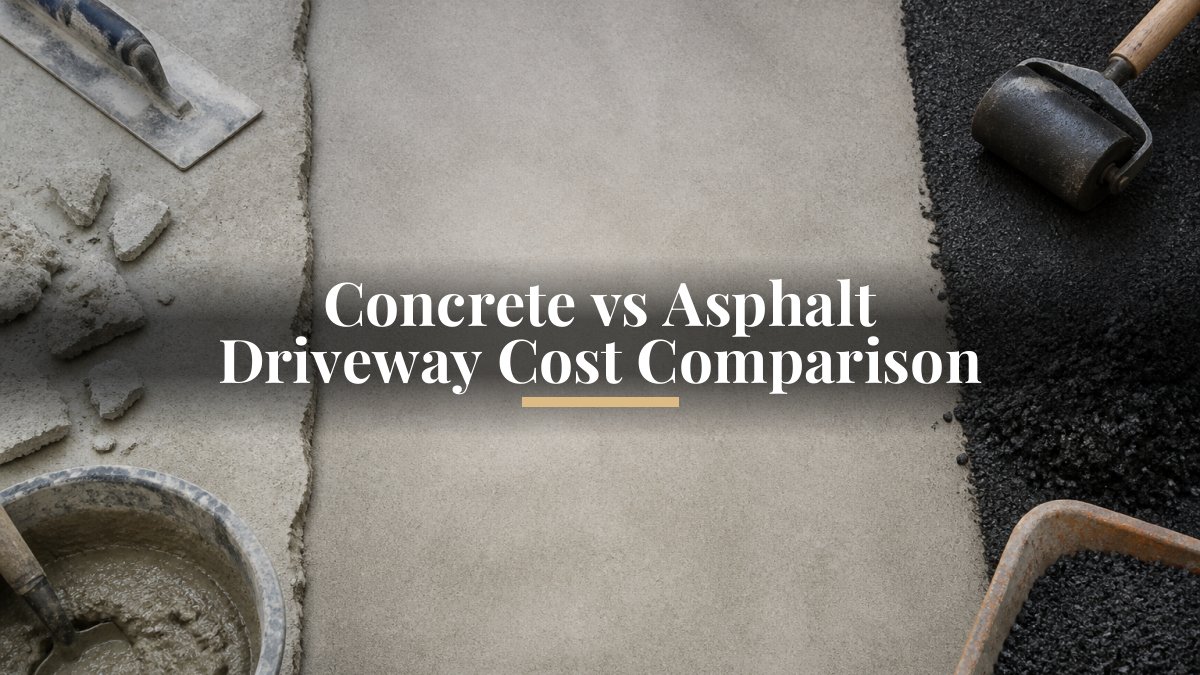
Concrete vs Asphalt Driveway Cost Comparison
Table of Contents
- Concrete vs Asphalt Driveway Cost Comparison at a Glance
- Asphalt Driveway Cost Per Square Foot
- Concrete Driveway Cost Per Square Foot
- Asphalt vs Concrete Driveway Lifespan and Durability
- Asphalt Driveway Maintenance and Sealing Requirements
- Hidden Costs and Site Preparation Factors
- Which Material Wins for Your Climate and Budget
- Conclusion
- Frequently Asked Questions
Last Updated: October 5, 2026
Concrete vs Asphalt Driveway Cost Comparison at a Glance
The upfront cost difference between concrete and asphalt is real, but it's only part of the story. Asphalt costs less to install; concrete lasts longer and needs less maintenance. The true driveway cost comparison depends on your climate, budget, and how long you plan to stay.
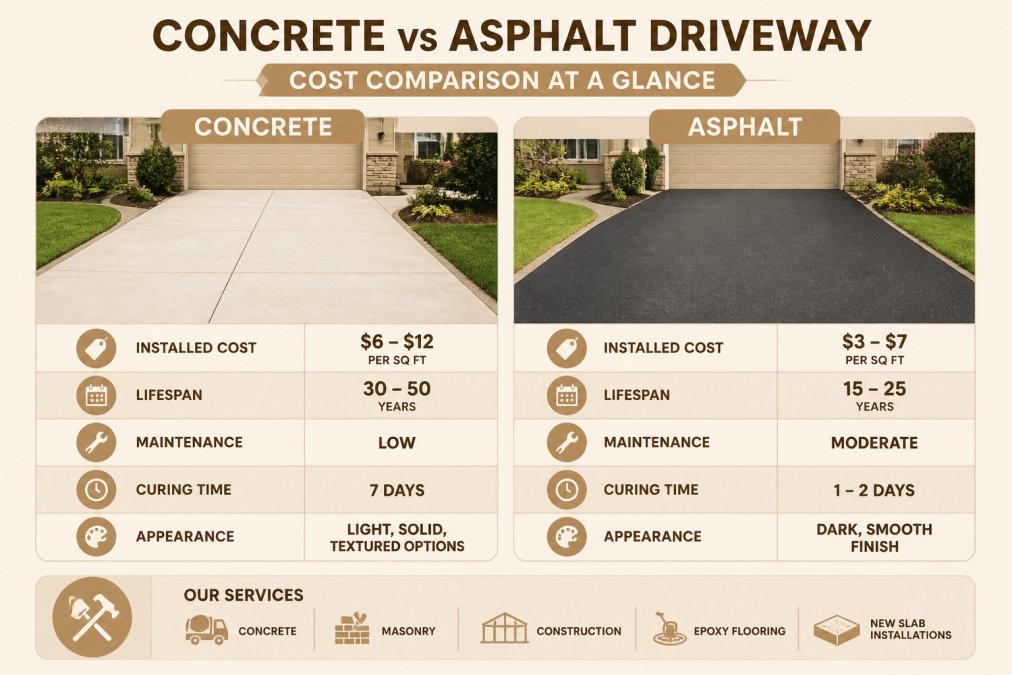
At Concrete Renovations, we've helped hundreds of homeowners compare not just installation price but total lifecycle cost. Most people focus only on day-one cost, which is where comparisons go wrong: your material choice affects maintenance, repair frequency, and replacement timing.
This guide covers the actual numbers, the hidden costs most contractors skip, and how climate affects which material fits your budget and home.
Asphalt Driveway Cost Per Square Foot
Asphalt is the cheaper material to install, and most homeowners pay noticeably less per square foot for asphalt than for concrete. The cost for asphalt driveway installation varies. A standard two-car driveway of about 600 square feet, or a longer 1,000-square-foot drive, will have pricing that depends on several factors.
That range is wide because the number you actually pay is built from several separate line items, not one blended rate:
- Excavation and grading: $1 to $3 per square foot when the subgrade has to be cut, shaped, or re-sloped.
- Aggregate base: $1 to $2 per square foot for a compacted 4- to 6-inch crushed-stone base.
- Hot-mix asphalt: $2 to $4 per square foot for a 2- to 3-inch compacted lift.
- Labor and equipment: rolled into the paving rate, but it climbs on tight lots, steep grades, or long hauls from the plant.
That compacted aggregate base is critical: skip it or do it poorly and you'll see cracking and settling within a few years. The base layer is a meaningful share of installation cost, even though you never see it once the asphalt goes down.
Thickness is the single biggest lever on price. A 2-inch lift over a fresh base is the budget option; a 3-inch lift over a properly compacted 6-inch base costs more but is what most practitioners recommend for driveways that will see regular vehicle traffic.
Local market conditions matter more than you'd expect. Where asphalt contractors are plentiful, prices run lower; where concrete dominates, you may pay more for the same work. Cold climates also impose a seasonal window, since most plants shut down in winter, and off-season paving carries a premium.
Concrete Driveway Cost Per Square Foot
Concrete costs more per square foot than asphalt at installation. The cost for concrete driveway installation varies. Basic gray concrete is at the lower end, with decorative finishes pushing toward the top.
The material costs more and installation demands more precision: concrete must be poured, finished, and cured properly, and mistakes are harder to fix than with asphalt. Here's how the installed number breaks down:
- Excavation, grading, and base: $1 to $3 per square foot for a compacted 4- to 6-inch gravel base.
- Formwork and reinforcement: $0.50 to $1.50 per square foot for forms and wire mesh or rebar.
- Concrete (4- to 6-inch slab): $3 to $6 per square foot for standard 4,000-psi mix.
- Finishing and curing: $1 to $2 per square foot for broom, trowel, or saw-cut joints.
- Decorative upgrades: stamped, colored, or exposed-aggregate finishes commonly add $3 to $8 per square foot on top of the base price.
Thickness matters as much as it does with asphalt. A 4-inch slab is the minimum for passenger vehicles; a 5- to 6-inch slab with rebar is what most practitioners recommend for driveways that will see trucks, RVs, or heavy loads.
Site prep is just as critical for concrete, and concrete is less forgiving: if the subgrade shifts or settles unevenly, it cracks. The base must be compacted to the right density, and drainage managed so water doesn't pool beneath the slab.
Concrete also offers options that asphalt doesn't. Stamped concrete, colored concrete, and decorative finishes all cost more than basic gray concrete. If you're comparing a basic asphalt driveway to a decorative concrete driveway, the cost gap widens significantly.
Finishing work, troweling the surface, controlling curing, and keeping traffic off during the first week, requires skill. A poorly finished surface looks rough, cracks more easily, and won't last as long. Cheap concrete work often shows its problems within the first year.
Asphalt vs Concrete Driveway Lifespan and Durability
Asphalt typically lasts 15-20 years with regular maintenance. Concrete typically lasts 25-30 years or longer with minimal maintenance. This durability difference is the biggest reason many homeowners choose concrete despite the higher upfront cost.
Asphalt breaks down from UV exposure, heat, and water infiltration. Sun oxidizes the binder, making it brittle; cracks form, water seeps in, and damage spreads fast. In freeze-thaw climates, water trapped in small cracks expands when it freezes, widening them further.
Concrete is more stable: it doesn't oxidize or turn brittle from sun. It does crack, especially in freeze-thaw climates or if the subgrade settles, but those cracks don't spread as aggressively as asphalt's. A sealed concrete driveway resists water penetration for decades.
Climate affects durability dramatically. In hot, dry climates asphalt can last closer to 20 years; in freeze-thaw regions, only 12-15. Concrete performs better in freeze-thaw climates but isn't immune. Proper drainage and sealing extend concrete life in all climates.
| Material | Typical Lifespan | Best Climate | Worst Climate |
|---|---|---|---|
| Asphalt | 15-20 years | Hot, dry | Freeze-thaw |
| Concrete | 25-30+ years | Any | Extreme freeze-thaw |
Asphalt Driveway Maintenance and Sealing Requirements
Asphalt requires ongoing maintenance to reach its full lifespan. Without it, you're looking at 10-12 years before major repairs become necessary.
Seal coating is the most important task: a thin protective layer over the asphalt that shields the binder from UV and water. Most contractors recommend it every 2-3 years, starting within the first year. It's cheap per application but adds up.
Crack filling is second. Small cracks appear naturally as asphalt ages; fill them early and you keep water out. Ignore them and they widen into potholes, which cost far more to repair.
Pothole repair requires cutting out the damaged section, preparing the base, and patching with new asphalt. If potholes are numerous or deep, you may need resurfacing, a new layer of asphalt applied over the existing surface. Resurfacing costs less than full replacement but more than maintenance.
The total maintenance cost for asphalt over 20 years is substantial. Multiple seal coats, crack filling, and possibly one resurfacing add up to thousands of dollars. This is where the asphalt driveway maintenance and sealing costs become a real factor in your total driveway cost comparison.
Hidden Costs and Site Preparation Factors
Most homeowners focus on the cost per square foot and forget about the work that happens before any material goes down. Site preparation can add 15-30% to your total project cost, depending on your property.
Excavation and grading come first. If your property slopes toward the home or drains poorly, the contractor may dig deeper, regrade, or install drainage. Rocky soil means more excavation; soft or unstable soil may need extra base material.
Removal of an existing driveway adds cost. Asphalt removal is cheaper than concrete removal because asphalt can be broken up and hauled away more easily. Concrete removal requires heavy equipment and often costs significantly more.
Drainage solutions are sometimes necessary. If water pools on the driveway or drains toward your foundation, expect recommendations like French drains, grading adjustments, or permeable base materials, extra cost, but they prevent long-term water damage.
Local soil matters: clay compacts well but traps water, sand drains fast but may need a thicker base, and rocky soil requires excavation to remove large stones. A contractor's site inspection reveals these conditions and shapes the final quote.
Which Material Wins for Your Climate and Budget
The answer depends on three factors: your upfront budget, your climate, and how long you plan to stay in your home.
Choose asphalt if: You have a tight budget and plan to stay in your home for fewer than 15 years. You're comfortable with regular maintenance (seal coating every 2-3 years). You live in a hot, dry climate where asphalt performs well.
Choose concrete if: You plan to stay in your home for 20+ years. You want minimal maintenance and lower long-term costs. You live in a freeze-thaw climate or an area with high humidity. You value appearance and are willing to pay for decorative finishes.
Climate is the most underestimated factor. In freeze-thaw regions, concrete's durability justifies its higher upfront cost; in hot, dry climates, asphalt can perform well for 20 years with proper maintenance. Humid climates are hard on both, but concrete resists moisture better.
According to NerdWallet's home improvement cost guides, homeowners in northern climates increasingly choose concrete despite higher upfront costs because the total lifecycle cost comes out ahead when you factor in maintenance and replacement cycles.
Conclusion
The concrete vs asphalt driveway cost comparison isn't just about installation price. Asphalt costs less upfront, but concrete costs less over a 25-year lifespan once you factor in maintenance, sealing, repairs, and eventual replacement.
Your climate, timeline, and maintenance preferences determine which material makes financial sense. In freeze-thaw climates, concrete wins on durability; in hot, dry climates, asphalt performs well if maintained. Quotes from local contractors, plus questions about base layer quality, site prep costs, and warranty terms, give you the real numbers.
At Concrete Renovations, we specialize in both concrete and asphalt installations. Our certified and insured team handles site preparation, base layer installation, and finishing work with the precision that determines whether your driveway lasts 15 years or 30. We provide free estimates so you can compare our concrete and asphalt pricing with confidence. With over 50 years of combined experience and a one-year warranty on all workmanship, we ensure your driveway investment pays off for decades. Contact Concrete Renovations for a quote and discover how we can enhance your property's curb appeal and value.
Frequently Asked Questions
Is it cheaper to get an asphalt driveway or a concrete driveway?
Asphalt typically costs less upfront. Concrete driveway cost per square foot runs higher initially, but concrete lasts longer with lower maintenance. Over a 30-year lifecycle, the total cost difference narrows significantly. Your choice depends on whether you prioritize lower upfront expense or long-term durability. Get a free estimate from a certified contractor to compare prices for your specific project size and site conditions.
How much would a 200-foot asphalt driveway cost?
Asphalt driveway cost per square foot varies by region, site preparation needs, and contractor rates. A 200-foot driveway's total cost depends on its width (typically 9-12 feet) and whether the subgrade requires excavation, grading, or aggregate base installation. Request quotes from local contractors who can assess your property and provide accurate pricing based on actual conditions and current material costs.
Which driveway lasts longer, concrete or asphalt?
Concrete typically lasts 25-40 years, while asphalt lasts 15-20 years. Asphalt vs concrete driveway lifespan depends heavily on climate, drainage, and maintenance. Freeze-thaw cycles in cold regions degrade asphalt faster. Concrete resists weather better but can crack under extreme temperature swings or poor site preparation. Proper base installation and drainage extend either material's life significantly.
How often does an asphalt driveway need to be sealed?
Asphalt driveway maintenance and sealing should occur every 2-3 years, or sooner in harsh climates. Initial seal coat typically applies 6-12 months after installation. Sealing protects against water penetration, UV damage, and oxidation. Cost and frequency depend on traffic, weather exposure, and existing damage. Skipping sealing accelerates cracking and shortens the driveway's lifespan by years.