 Comparison
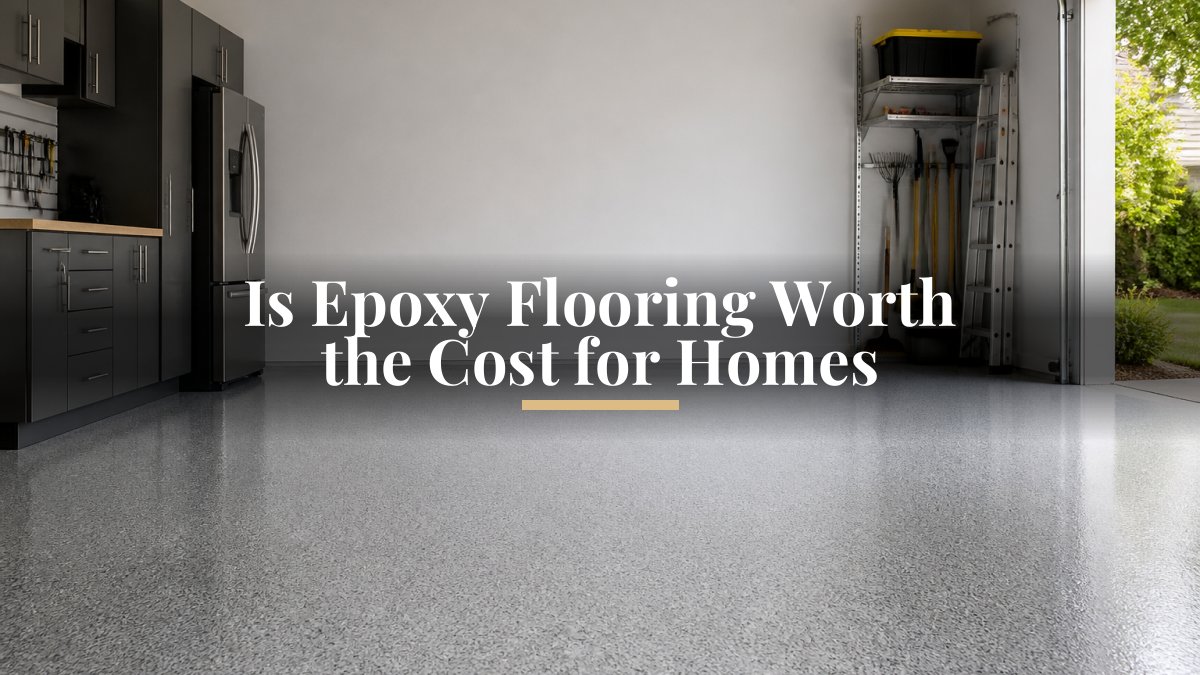
Is Epoxy Flooring Worth the Cost for Homes
Table of Contents
- Is Epoxy Flooring Worth the Cost for Homes: The Real Verdict
- Residential Epoxy Flooring vs Polished Concrete: Which Delivers Better Value
- Average Lifespan of Residential Epoxy Flooring and Durability Expectations
- Cost Per Square Foot Breakdown: DIY vs Professional Installation
- Epoxy Floor Maintenance Tips and Long-Term Care Requirements
- Common Failure Causes and How Professional Installation Prevents Them
- Resale Value Impact and Environmental Considerations
- Frequently Asked Questions
Last Updated: October 7, 2026
Is Epoxy Flooring Worth the Cost for Homes: The Real Verdict
Epoxy flooring has become a popular choice for homeowners looking to upgrade garages, basements, and patios. But the real question isn't whether it looks good, it's whether is epoxy flooring worth the cost for homes when you factor in installation, maintenance, and longevity.
The answer depends on three things: your budget, your timeline, and what you're willing to maintain. At Concrete Renovations, we help homeowners understand the true value proposition of epoxy flooring, and the picture is more nuanced than most guides suggest.
Here's what matters: epoxy flooring can last 10-15 years in residential settings when properly installed and maintained. But improper surface preparation, moisture issues, or cheap materials can cut that lifespan in half. The difference between a DIY kit and professional installation isn't just about aesthetics, it's about whether your floor will still look good in five years.
This guide breaks down the real costs, durability expectations, and maintenance requirements so you can make an informed decision for your home.
Residential Epoxy Flooring vs Polished Concrete: Which Delivers Better Value
Comparing residential epoxy flooring vs polished concrete requires looking beyond the initial price tag. Both solutions address the same problem: protecting and beautifying concrete. But they solve it differently.
Epoxy flooring creates a thick, protective coating that sits on top of your concrete. Polished concrete, by contrast, grinds down the existing surface and seals it. The practical difference is significant.
Epoxy offers superior protection against stains, chemicals, and impact damage. A spilled engine oil that would stain polished concrete simply wipes off epoxy. This matters if you have a workshop, active garage, or high-traffic area. Epoxy also provides more design flexibility, metallic finishes, flake systems, and custom colors are all possible.
Polished concrete wins on maintenance simplicity. It requires only regular sweeping and occasional resealing. Epoxy demands more attention: you'll need to avoid certain cleaners, watch for UV damage in sunny spaces, and monitor for delamination at the edges.
For homeowners who plan to stay in their home long-term and want maximum durability, epoxy typically delivers better value. For those seeking a low-maintenance aesthetic with a more natural concrete look, polished concrete is the smarter choice.
| Feature | Epoxy Flooring | Polished Concrete |
|---|---|---|
| Stain Resistance | Excellent | Moderate |
| Impact Resistance | High | Moderate |
| Maintenance Effort | Moderate to High | Low |
| Design Options | Extensive | Limited |
| Typical Lifespan | 10-15 years | 8-12 years |
| Best For | Garages, workshops | Basements, showrooms |
Average Lifespan of Residential Epoxy Flooring and Durability Expectations
The average lifespan of residential epoxy flooring is 10-15 years under normal conditions. But "normal" is the critical qualifier here.
This lifespan assumes three things: proper surface preparation before application, adequate moisture control under the slab, and reasonable maintenance. Miss any of these, and you're looking at failure in 3-5 years.
What causes epoxy to fail prematurely? Moisture is the biggest culprit. If your concrete sits on a damp subgrade without a vapor barrier, moisture will migrate upward, causing the epoxy to bubble and peel. This isn't a defect in the epoxy, it's a failure of the substrate preparation.
UV exposure also degrades epoxy over time, particularly in garage doors or spaces with direct sunlight. Standard epoxy yellows and fades. If you need UV stability, polyaspartic coatings or high-end epoxy systems cost more but resist fading significantly better.
Heavy equipment traffic accelerates wear. A garage with light use will look pristine at year 10. A workshop with a 5,000-pound lift running daily will show significant wear by year 7-8.
The real durability expectation: if you invest in professional installation with proper substrate preparation, your epoxy floor will last 10-15 years with routine maintenance. If you cut corners on prep work, expect 3-7 years before visible degradation.
Cost Per Square Foot Breakdown: DIY vs Professional Installation
The cost calculation for epoxy flooring breaks down into two distinct paths: DIY kits and professional installation. Understanding both is essential to answering whether epoxy flooring is worth the cost for your home.
DIY epoxy kits start at roughly $1.08 to $2.66 per square foot for materials. For a 500-square-foot garage, that's $540 to $1,330 in materials. This assumes you're doing all the labor yourself and have the tools required: a concrete grinder, degreaser, and application equipment.
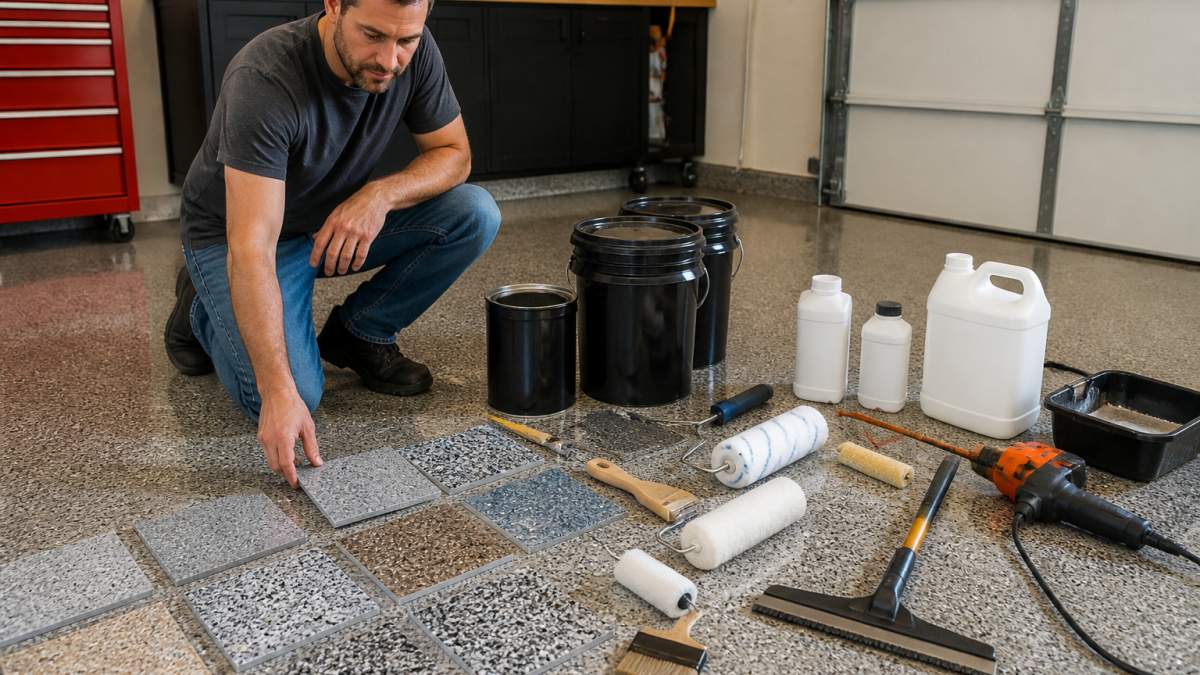
Professional installation costs depend on the system, surface condition, and specific requirements. A basic epoxy coating with minimal prep might be at a different price point than a full broadcast flake system with extensive crack repair and moisture mitigation. For a 500-square-foot garage, professional installation will vary.
The hidden cost in DIY is surface preparation. Improper grinding, acid etching, or moisture testing will sabotage your project before you ever apply the epoxy. Many DIY failures trace back to rushed or inadequate prep work, not defective epoxy.
Professional installation handles prep work properly and carries a warranty. This typically costs significantly more upfront, but the difference is in what you're actually getting: a guaranteed result backed by expertise and insurance. A professional installer will also test for moisture vapor transmission, which is the leading cause of epoxy failure.
When comparing quotes, ask what surface preparation is included. Some low bids skip diamond grinding and moisture testing entirely, which is why they can undercut legitimate installers. A proper quote will itemize grinding, crack repair, moisture mitigation (if needed), base coat, color coat, and topcoat. If a quote doesn't mention these steps, it's not a complete comparison.
Epoxy Floor Maintenance Tips and Long-Term Care Requirements
Maintaining epoxy flooring is straightforward but non-negotiable. Neglect maintenance, and your floor will degrade faster than the lifespan estimates suggest.
Weekly maintenance is simple: sweep or vacuum to remove dust and debris. Dust particles trapped under foot traffic act like sandpaper, accelerating wear. Monthly, damp-mop with a pH-neutral cleaner. Avoid acidic cleaners, bleach, and oil-based products, these degrade the epoxy coating.
Spot-clean spills immediately. While epoxy resists staining, some substances (like certain dyes or industrial chemicals) can penetrate if left sitting. The longer a spill sits, the higher the risk of discoloration or damage.
Watch for delamination at edges and seams. If you notice the coating lifting or bubbling at the perimeter, address it quickly. Small areas can be recoated; widespread delamination requires professional repair.
UV-exposed areas need extra attention. If your epoxy floor is in a garage with a door that opens frequently or in a sunroom, expect faster fading. Plan for a refresher coat every 5-7 years in high-UV areas, versus 10+ years in protected spaces.
Avoid dragging heavy furniture or equipment across the floor. Use furniture pads. While epoxy is durable, it's not indestructible, sharp edges and sustained pressure can gouge the surface.
Common Failure Causes and How Professional Installation Prevents Them
Most epoxy flooring failures aren't caused by defective epoxy. They're caused by one of four preventable mistakes. Understanding the mechanism behind each failure is the difference between a floor that lasts 15 years and one that peels in 18 months.
Moisture vapor transmission is the leading cause of failure. Concrete wicks moisture from the ground. If that moisture reaches the epoxy-concrete interface, it creates pressure that pushes the coating away from the substrate.
Professional installers test for moisture before application using calcium chloride tests (ASTM F1869) or relative humidity tests (ASTM F2170). The calcium chloride test measures moisture emission rate in pounds per 1,000 square feet per 24 hours.
Poor surface preparation is the second culprit. Epoxy bonds only to clean, properly profiled concrete. If the surface is contaminated with dust, oil, or old sealers, the epoxy won't adhere properly. Professional grinding removes the top layer of concrete and creates mechanical texture for bonding.
Incorrect mixing ratios cause adhesion and curing problems. Epoxy is a two-part system. The base and hardener must be mixed in exact proportions. Too much hardener, and the epoxy cures too fast and becomes brittle. Too little, and it remains tacky.
Inadequate curing time between coats creates weak bonds between layers. Epoxy needs specific time windows to cure before the next coat. Temperature and humidity affect curing speed. If you recoat too soon, the solvent in the new coat can soften the previous layer.
Professional installation prevents these failures through testing, proper equipment, trained application, and adherence to manufacturer specifications. This is why professional epoxy carries a warranty and DIY projects typically don't. The warranty is not just a marketing tool; it's a signal that the installer has controlled the variables that cause failure.
Resale Value Impact and Environmental Considerations
A well-maintained epoxy floor can add perceived value to your home, particularly in the garage or basement. Buyers see a finished, professional space rather than raw concrete. However, epoxy flooring is not a high-ROI renovation in the traditional sense, you won't recoup 100% of your investment at sale.
The value add is contextual. In a high-end home with other premium finishes, epoxy enhances the package. In a modest home, it's a nice-to-have rather than a must-have.
The environmental angle matters if sustainability is a priority. Standard epoxy contains volatile organic compounds (VOCs) that off-gas during and after installation. This affects indoor air quality, particularly in enclosed spaces. Polyaspartic and water-based epoxy systems have lower VOC content, but they cost more.
If you're applying epoxy in a basement or attached garage, ventilation during and after application is essential. Proper curing also requires adequate airflow to allow VOCs to dissipate. Professional installers manage this; DIY applicators often don't.
For environmentally conscious homeowners, polished concrete or grind-and-seal systems offer lower-VOC alternatives that still protect the concrete and improve aesthetics.
Epoxy flooring is worth the cost if you prioritize durability, stain resistance, and a finished appearance. It's not worth the cost if you're hoping for a quick ROI or minimal maintenance.
The real value comes from professional installation. If you're ready to understand the true cost and timeline for your space, get a free estimate from our team and let's build a floor that lasts.
Frequently Asked Questions
Does epoxy flooring increase home resale value?
Epoxy flooring can enhance resale value by improving curb appeal and demonstrating that the property has been well-maintained. A finished garage or basement with durable epoxy flooring appeals to buyers seeking move-in-ready homes. However, the resale value increase depends on your local market, the overall condition of the home, and buyer preferences. Professional installation with quality materials and proper surface preparation creates a more favorable impression than DIY work, which may concern future buyers about longevity and workmanship.
How long does professional epoxy flooring last in a residential garage?
Professional epoxy flooring typically lasts 10-15 years or longer in residential garages with proper maintenance and normal foot traffic. High-traffic areas or spaces with heavy equipment may see reduced lifespan due to abrasion and impact. The durability depends on the epoxy system used, high-build epoxy systems last longer than thin-coat options. Proper surface preparation, correct curing time, and adherence to maintenance routines significantly extend the flooring's lifespan. Professional installation includes a one-year warranty on workmanship, giving you protection against premature failure from application errors.
What are the main disadvantages of epoxy flooring for homes?
Key disadvantages include slippery surfaces when wet, potential yellowing or fading under UV exposure, difficulty removing or repairing if damage occurs, and the need for careful surface preparation before installation. Epoxy can also trap moisture if the concrete substrate isn't properly sealed, leading to delamination. The upfront investment is substantial compared to sealed concrete, and improper installation or inadequate surface preparation causes premature peeling and failure. Additionally, epoxy flooring requires regular maintenance to prevent degradation from chemicals, oils, and heavy impact.
Can epoxy flooring be installed over existing cracked concrete?
Epoxy cannot be successfully applied over cracked concrete without addressing the underlying damage first. Cracks allow moisture vapor transmission through the substrate, which weakens the bond between the epoxy and concrete, causing delamination and peeling. Professional installation requires mechanical grinding and proper surface preparation to remove loose material and repair significant cracks. If your concrete has structural cracks or settlement issues, those must be repaired before epoxy application. This added preparation increases installation cost but prevents costly failure and ensures the flooring's durability.