 Comparison
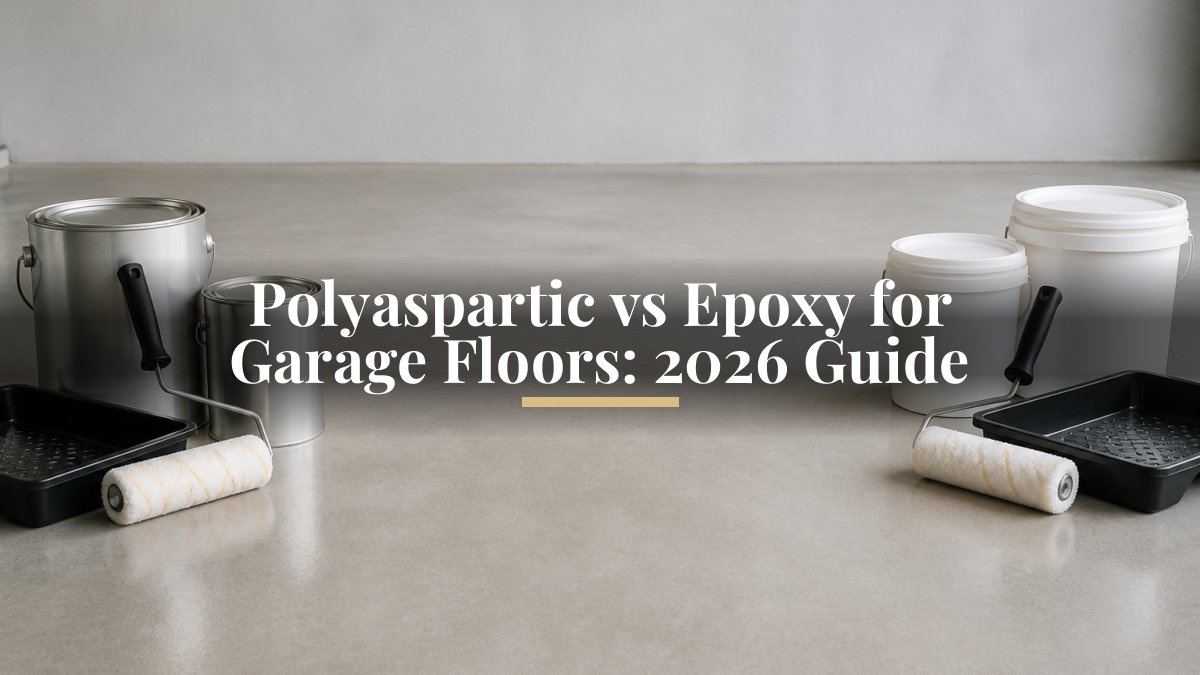
Polyaspartic vs Epoxy for Garage Floors: 2026 Guide
Table of Contents
- Polyaspartic vs Epoxy for Garage Floors: Key Differences
- Comparison Table: Epoxy and Polyaspartic at a Glance
- Durability and Impact Resistance: Which Coating Wins
- UV Stability and Yellowing Resistance
- Garage Floor Coating Installation Process
- Epoxy Garage Floor Maintenance Tips and Long-Term Care
- Polyaspartic Floor Coating Lifespan and Cost Considerations
- Environmental Impact and VOC Emissions
- Frequently Asked Questions
Last Updated: October 4, 2026
Polyaspartic vs Epoxy for Garage Floors: Key Differences
The decision between polyaspartic and epoxy for your garage floor matters significantly. The wrong choice leads to peeling, yellowing, and costly repairs within years.
Polyaspartic vs epoxy for garage floors comes down to three core trade-offs: cure time, UV stability, and long-term durability. Epoxy offers a proven, cost-effective foundation with excellent adhesion and moisture resistance. Polyaspartic delivers faster installation, superior UV protection, and greater flexibility under temperature swings. Neither is universally "better", the right choice depends on your timeline, budget, and how you use the space.
Comparison Table: Epoxy and Polyaspartic at a Glance
| Factor | Epoxy | Polyaspartic |
|---|---|---|
| Cure Time | 24-48 hours | 4-8 hours (same-day return to service) |
| UV Stability | Moderate (yellows over 2-5 years) | Excellent (resists yellowing) |
| Impact Resistance | Good | Excellent |
| Moisture Vapor Transmission | Lower tolerance | Higher tolerance |
| Flexibility | Rigid | Flexible (resists cracking) |
| Installation Window | 4-6 hours | 30-60 minutes (fast pot life) |
| Tensile Strength | 5,000-8,000 PSI | 7,000-10,000 PSI |
| Best For | Budget, standard use | High-traffic, UV-exposed, quick turnaround |
Durability and Impact Resistance: Which Coating Wins
Polyaspartic outperforms epoxy in impact resistance due to its flexibility, it flexes under shock rather than cracking. Epoxy's rigidity works fine for light to moderate residential use but shows limitations in high-traffic spaces where dropped tools or heavy equipment can create stress points leading to spalling.
Polyaspartic's higher tensile strength (7,000-10,000 PSI vs. epoxy's 5,000-8,000 PSI) allows it to stretch under load and temperature swings without cracking, while epoxy's rigidity leads to micro-fractures over time.
Epoxy suits residential garages with normal traffic; polyaspartic is worth the premium for commercial use or extreme temperature climates.
UV Stability and Yellowing Resistance
Polyaspartic resists yellowing while epoxy yellows due to UV exposure breaking down the resin's molecular bonds, causing a brownish or amber tint.
Polyaspartic maintains color for 10+ years in direct sunlight; epoxy yellows noticeably within 2-5 years in sun-exposed garages.
In sun-exposed garages, epoxy's yellowing is visible and prompts recoating sooner than expected, though the coating still protects the concrete.
For sun-exposed garages, polyaspartic's UV stability justifies the higher upfront cost over a 10-year lifespan.
Garage Floor Coating Installation Process
The installation process for both coatings follows the same general framework but diverges significantly in execution speed and working windows.
Substrate Preparation Requirements: The Hidden Failure Point
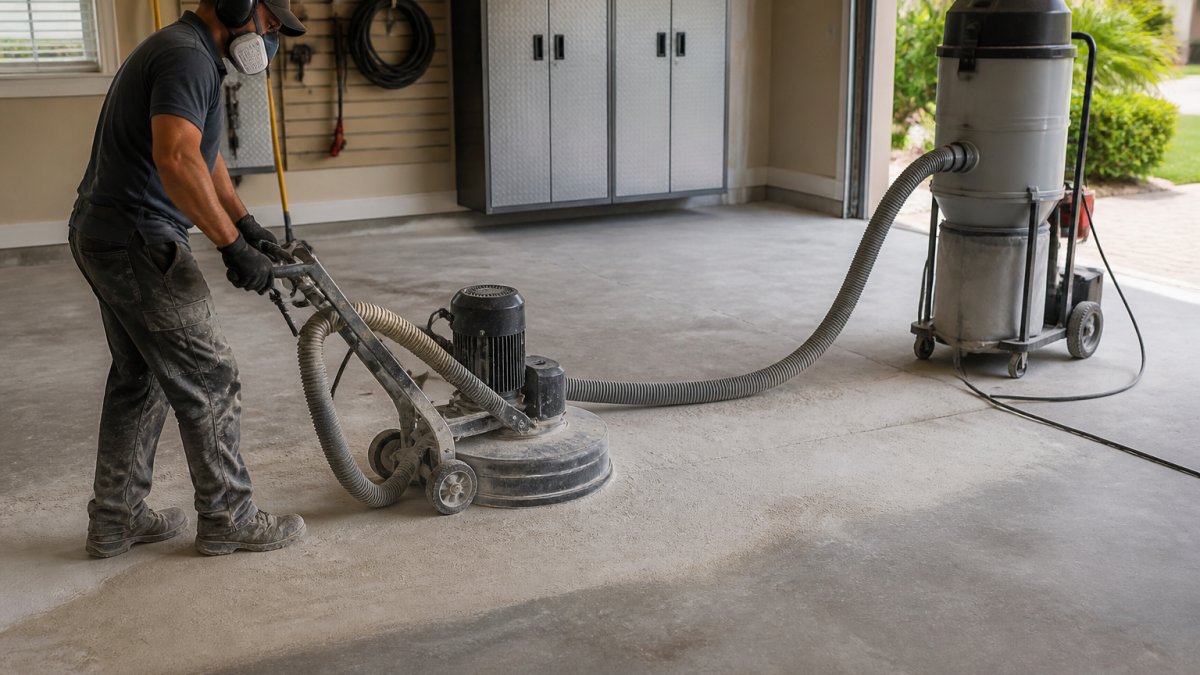
Proper concrete preparation determines whether your coating lasts 5 or 15 years. Most failures originate here, not from the coating itself.
Concrete must be cleaned to bare substrate using diamond grinding or shot blasting.
Moisture vapor transmission (MVT) testing is critical. If moisture exceeds the coating's tolerance, the coating delaminates from below, the most common reason for failure within 12-24 months.
Epoxy tolerates 3-5 pounds of moisture vapor per 1,000 sq ft per 24 hours; polyaspartic handles 5-8 pounds.
If moisture exceeds tolerance, a moisture barrier or primer is required before coating. Many contractors skip this to save money, then blame the coating when it fails.
Temperature and humidity matter. Most coatings require 50-85°F and humidity below 85%. Epoxy below 60°F extends cure to 48+ hours and weakens the bond. High humidity traps moisture, creating bubbles.
Cure Time and Installation Speed
Epoxy requires 24-48 hours before foot traffic; cars need 48+ hours. Full strength develops over 7 days.
Polyaspartic cures in 4-8 hours for same-day use, but has a 30-60 minute pot life. Epoxy's 4-6 hour pot life gives installers more flexibility.
Polyaspartic's short pot life requires experienced technicians and precise execution; mistakes are visible and permanent, which is why installation costs more.
Epoxy Garage Floor Maintenance Tips and Long-Term Care
Epoxy requires regular maintenance to preserve its appearance and function, but the real value lies in understanding how to repair and extend its life cost-effectively.
Routine Cleaning and Spill Management
Sweep weekly to prevent dulling. Clean spills promptly with pH-neutral cleaners; use warm water and mild dish soap for routine cleaning. Avoid harsh solvents, bleach, and acidic cleaners.
Mid-Life Resealing and Topcoat Refresh
Epoxy floors benefit from occasional resealing. A topcoat refresh every 3-5 years maintains gloss and UV protection. This is significantly less expensive than a full recoat and extends the life of the original coating by 3-5 additional years. A topcoat refresh typically costs 30-50% of a full epoxy installation and takes 1-2 days including cure time.
The yellowing issue means the floor will look noticeably different after 3-5 years in a sun-exposed garage. This isn't a failure, it's normal chemistry, but it's worth planning for visually. Many homeowners choose to apply a clear topcoat with UV inhibitors at the 3-year mark to slow further yellowing and restore gloss.
Localized Repair and Patching
Scratches and minor damage can be touched up or polished out. Deep gouges or spalls may require localized recoating. Most epoxy damage is repairable without replacing the entire floor, which is a major cost advantage over full replacement.
For small scratches (under 1 inch), a touch-up epoxy pen or small brush application of the same epoxy formulation can blend the repair. The key is matching the original color and gloss.
For larger damaged areas (2-4 square feet), localized recoating is more practical. The damaged area is ground out, the edges feathered to blend with the surrounding coating, and fresh epoxy applied. This requires skill to blend seamlessly, so hire a professional.
For severe spalling or deep cracks that have opened up, the concrete substrate may need repair before recoating. If the concrete itself is damaged, the epoxy repair will only last as long as the underlying concrete remains stable.
Long-Term Cost-Per-Year Analysis
When calculating the true cost of epoxy ownership, factor in maintenance, resealing, and potential mid-life recoating:
- Initial installation: Epoxy typically costs $3-$8 per square foot installed (varies by region and prep complexity).
- Routine maintenance: Minimal cost; mostly your time sweeping and cleaning.
- Topcoat refresh (year 3-5): $1-$3 per square foot, extends life by 3-5 years.
- Full recoat (year 7-10): If the original coating has yellowed significantly or shows wear, a full recoat may be necessary. This costs $3-$8 per square foot again, similar to the original installation.
For a 500-square-foot garage floor:
- Initial epoxy: $1,500-$4,000
- Topcoat refresh at year 4: $500-$1,500
- Full recoat at year 8: $1,500-$4,000
- Total 10-year cost: $3,500-$9,500
- Cost per year: $350-$950 per year
This model assumes you perform the topcoat refresh to extend the original coating's life. If you skip the refresh and go straight to a full recoat at year 7, costs are higher and the floor experiences more downtime.
Lifespan Expectations
Epoxy typically lasts 5-10 years before yellowing and wear become noticeable enough to warrant recoating. In low-traffic residential garages with minimal sun exposure, epoxy can last 10+ years. In high-traffic or sun-exposed garages, 5-7 years is more realistic before the aesthetic appeal fades.
The coating doesn't fail functionally at this point; it still protects the concrete. But the visual degradation, yellowing, dulling, minor scratches, prompts most homeowners to refresh or recoat. This is normal and expected, not a defect.
Polyaspartic Floor Coating Lifespan and Cost Considerations
Polyaspartic typically lasts 10-15 years with minimal degradation, compared to epoxy's 5-10 year useful lifespan before yellowing and wear become noticeable.
Maintenance is similar to epoxy: regular sweeping, prompt spill cleanup, and pH-neutral cleaners. The main advantage is that polyaspartic resists staining and chemical damage better than epoxy, so you'll spend less time on intensive cleaning.
Polyaspartic's flexibility means it resists cracking under thermal stress. In garages where the concrete expands and contracts with seasonal temperature swings, this durability advantage compounds over time. You're less likely to see stress cracks that lead to peeling.
The upfront cost of polyaspartic is higher than epoxy, the material and labor both reflect the faster installation speed and premium performance. However, when calculated on a cost-per-year basis over a 10-15 year lifespan, polyaspartic often comes out ahead. You're buying durability and avoiding the need for recoating mid-life.
Environmental Impact and VOC Emissions
Both epoxy and polyaspartic are resinous flooring systems, but they differ in their environmental footprint.
Epoxy typically has higher VOC (volatile organic compound) emissions during and immediately after application. VOCs contribute to indoor air quality concerns and can linger for days after installation. Proper ventilation is essential during cure.
Polyaspartic also contains VOCs, but the faster cure time means off-gassing happens more quickly. The fumes dissipate faster, reducing the total time your garage has elevated VOC levels.
Neither coating is "green" in the traditional sense, both are petroleum-based synthetic materials. If environmental impact is a priority, ask your contractor about low-VOC formulations for whichever coating you choose.
Disposal and end-of-life impact are similar for both. Once cured, both coatings are chemically inert and don't leach into soil or groundwater.
Your garage floor coating is an investment in durability, aesthetics, and property value. The choice between polyaspartic and epoxy depends on your timeline, budget, and how you use the space.
Concrete Renovations has installed both coatings for hundreds of homeowners and commercial clients across Florida. Our certified team ensures proper substrate preparation, professional application, and a one-year warranty on all workmanship. Get a quote today to see how we can transform your garage floor.
Frequently Asked Questions
Is polyaspartic coating more durable than epoxy?
Polyaspartic coatings generally offer superior durability and longevity compared to standard epoxy. Polyaspartic formulations resist UV yellowing better, cure faster, and provide greater flexibility to resist cracking under temperature swings. Epoxy excels at adhesion and moisture resistance but is more prone to discoloration over years of sunlight exposure. For long-term garage floor performance, polyaspartic typically outlasts epoxy by several years, though both require proper substrate preparation to perform well.
Can polyaspartic be applied directly to concrete without primer?
No. Both epoxy and polyaspartic require thorough substrate preparation before application. Concrete must be diamond-ground or shot-blasted to remove sealers, coatings, and contaminants, and moisture testing must confirm the slab is dry. Skipping this step causes adhesion failure and premature peeling. Some polyaspartic systems use an epoxy base coat to improve moisture vapor transmission control, while others apply directly after prep. Always follow the manufacturer's guidelines and hire a professional installer to ensure proper surface readiness.
What are the main downsides of polyaspartic floor coatings?
Polyaspartic coatings have a very short pot life and working window due to rapid curing, which demands skilled application and can limit customization options on-site. The fast cure also makes repair of mistakes difficult. Upfront costs are higher than standard epoxy. In humid or cool conditions, moisture can trap under the coating if substrate prep is inadequate, causing blistering. Additionally, the speed advantage means less flexibility for homeowners to adjust plans mid-project, and application requires professional equipment and expertise.
How do installation times differ between epoxy and polyaspartic?
Epoxy typically requires 24-72 hours of curing before foot traffic and 5-7 days before vehicle use. Polyaspartic cures much faster, often allowing foot traffic within 4-8 hours and vehicle use within 24 hours. This speed advantage makes polyaspartic ideal for commercial spaces and busy homeowners who need rapid turnaround. However, the fast cure time also demands experienced installers and precise environmental conditions during application. Substrate preparation takes the same time for both; the difference is in the topcoat curing window.
Which garage floor coating offers better UV resistance?
Polyaspartic coatings offer superior UV resistance and gloss retention compared to epoxy. Polyaspartic formulations are engineered to resist yellowing and discoloration from sunlight exposure, maintaining color and clarity for 10+ years. Standard epoxy yellows noticeably within 2-3 years of UV exposure, particularly in bright environments. If your garage has windows or receives direct sunlight, polyaspartic is the better choice for long-term appearance. Epoxy can be paired with a polyaspartic topcoat in hybrid systems to improve UV performance while retaining epoxy's moisture-barrier benefits.