 How-to
Why Concrete Slabs Settle After Pouring
Table of Contents
- Why Concrete Slabs Settle After Pouring
- Causes of Soil Erosion and Washout Under Concrete
- Concrete Slab Soil Compaction Requirements and Subgrade Preparation
- How Moisture Content and Drainage Affect Settlement
- Signs of Foundation Settlement in Concrete
- How to Fix Sinking Concrete Slabs
- Preventative Measures for New Concrete Pours
- Frequently Asked Questions
Last Updated: October 2, 2026
Why Concrete Slabs Settle After Pouring
Concrete slabs settle after pouring due to a combination of soil preparation issues, moisture changes, and load-bearing failures beneath the surface. Understanding why this happens is essential for homeowners and property managers who want to avoid costly repairs down the road.
When concrete is first poured, it sits on a foundation layer called the subgrade. This layer must be properly compacted and stable. If it isn't, the concrete above will sink, crack, and become uneven over time. The problem isn't always visible immediately, settlement can occur gradually over months or years.
At Concrete Renovations, we've seen countless driveways, patios, and slabs fail because the preparation work was rushed or done incorrectly. The good news is that settlement is largely preventable with proper planning and execution.
Causes of Soil Erosion and Washout Under Concrete
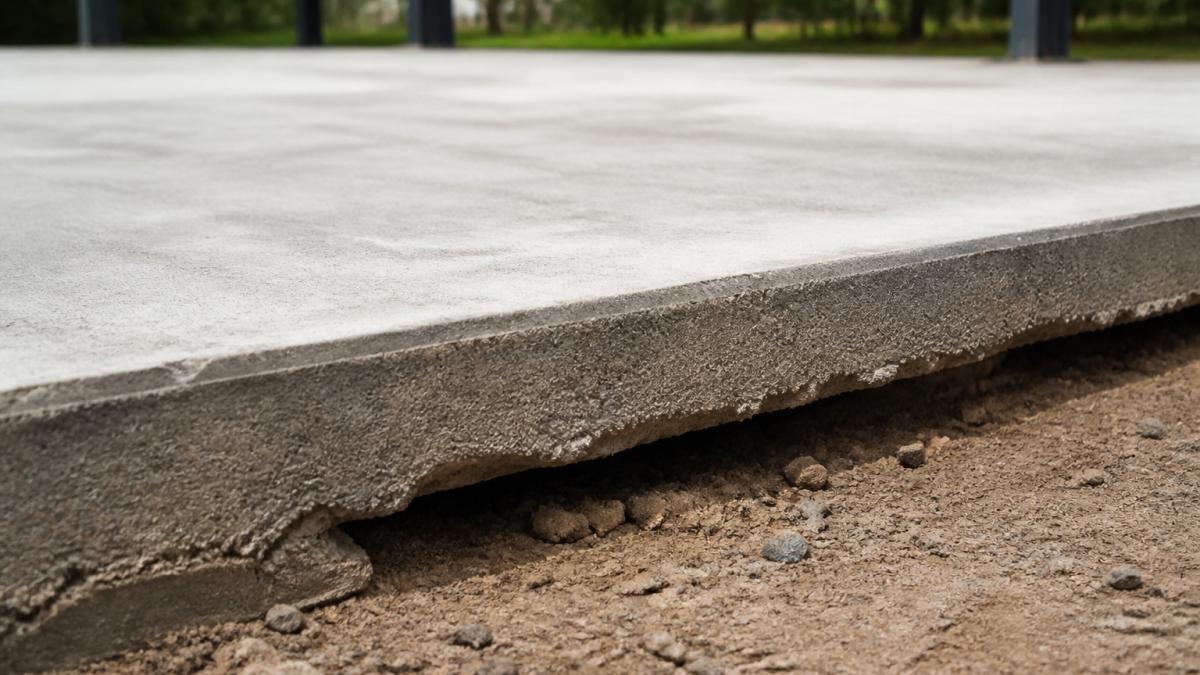
Soil erosion happens when water moves beneath your concrete slab and carries soil particles away. This creates voids, empty spaces, that the concrete eventually sinks into.
Several factors cause this problem:
- Poor drainage around the slab allows water to pool and seep underneath
- Downspout runoff directed toward the foundation washes away soil
- Grading issues where the ground slopes toward the slab instead of away from it
- High water table means groundwater naturally moves through the soil
- Freeze-thaw cycles in colder climates expand and contract soil, creating movement
When water erodes the soil, the slab loses support. Hydrostatic pressure from standing water also pushes upward on the concrete, forcing it to move. Over time, this leads to visible cracking and uneven surfaces.
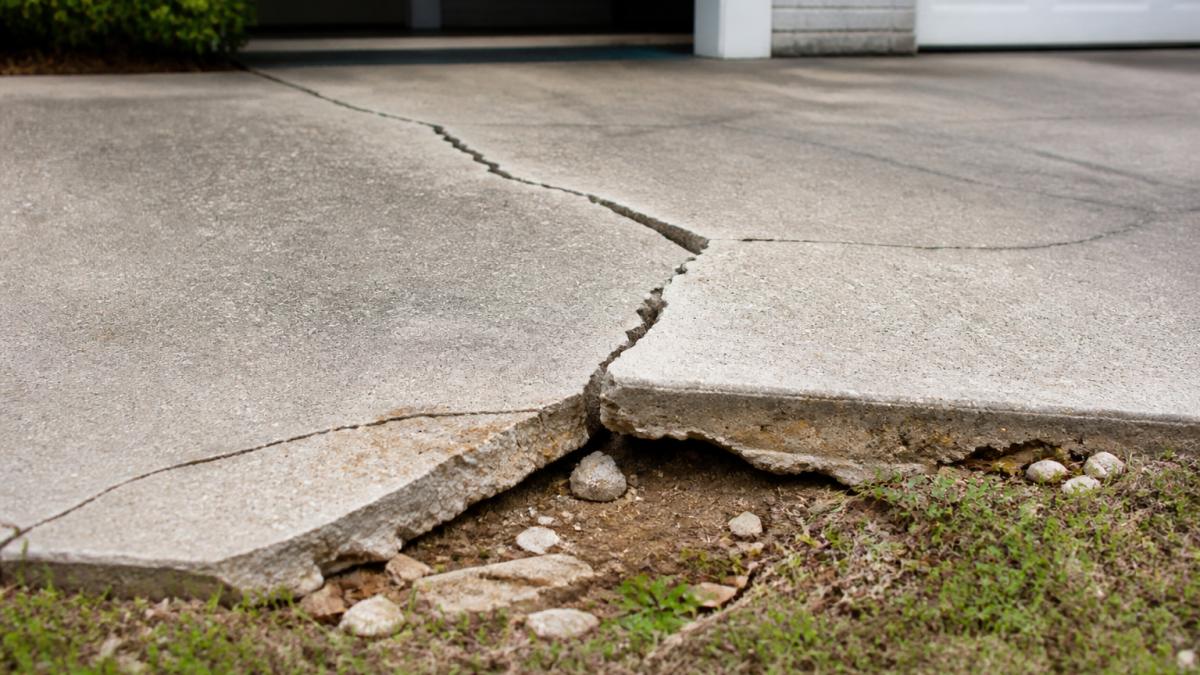
The fix starts with controlling water. Gutters, downspouts, and proper grading redirect moisture away from the slab. Without this, even a perfectly prepared subgrade will eventually fail.
Concrete Slab Soil Compaction Requirements and Subgrade Preparation
The subgrade is the soil layer directly beneath your concrete. It must be compacted to the right density to support the weight of the slab and any traffic on top of it. But before you can compact properly, you need to know what you're working with.
Geotechnical soil testing is the preventative step most homeowners and even some contractors skip. A soil engineer performs a bearing capacity test to determine whether your soil can support a concrete slab without settling. This involves:
- Soil boring and sampling, Drilling 3-5 feet deep to extract soil samples from the area where concrete will be poured
- Laboratory analysis, Testing soil composition, clay content, and moisture retention to classify soil type
- Bearing capacity calculation, Determining the maximum load (in pounds per square foot) the soil can safely support
- Recommendations for base preparation, Specifying the depth and type of aggregate base needed for your specific soil conditions
The test report tells you exactly what compaction density is required and what base material thickness is needed.
Proper compaction density is measured in pounds per cubic foot and varies by soil type. Most concrete slabs require the subgrade to be compacted to 95% of its maximum density (called Proctor density). This sounds technical, but it's straightforward: the soil must be compressed until it's dense enough to resist settling under load.
Here's what proper preparation looks like:
- Remove topsoil and organic material down to stable soil (typically 6-12 inches)
- Grade the base so water drains away from the slab
- Add an aggregate base layer (typically 4-6 inches of compacted crushed stone, sized per soil test recommendations)
- Compact each layer in multiple passes with mechanical equipment (plate compactor for small areas, vibratory roller for larger projects)
- Verify compaction with a density test or nuclear gauge to confirm 95% Proctor density is achieved
- Achieve consistent compaction across the entire area, soft spots will settle first
Many contractors skip steps to save time and money. They don't remove enough topsoil. They don't perform soil testing. They don't compact thoroughly. They don't add proper base material. When this happens, the concrete will settle.
Poor compaction creates voids in the soil, empty spaces that collapse under the weight of the concrete, causing the slab to sink. The process may take months or years, but it's inevitable if the foundation isn't solid.
Climate-specific soil challenges also affect settlement risk. In cold climates with freeze-thaw cycles, soil expands when water freezes and contracts when it thaws, creating movement. In arid climates with expansive clay soils, moisture changes cause the soil to swell and shrink dramatically. A soil test identifies these risks so you can design the base and drainage accordingly. For example, freeze-thaw areas may require a thicker base layer or better drainage; expansive clay areas may require a moisture barrier or deeper excavation to stable soil.
How Moisture Content and Drainage Affect Settlement
Soil moisture plays a critical role in how concrete behaves. Soil with too much water loses strength. Soil that's too dry can shift and settle unevenly.
Optimal moisture content allows the soil to compact properly and maintain its strength. Too wet, and the soil becomes unstable. Too dry, and it won't compact effectively.
Drainage is equally important. Water that pools beneath the slab causes several problems:
- Reduces the load-bearing capacity of the subgrade
- Creates erosion and washout of soil particles
- Triggers freeze-thaw cycles that expand and contract the soil
- Promotes heaving in colder climates
Proper drainage means water moves away from the slab, not under it. This requires:
- Sloping the ground away from the concrete (at least 2% grade)
- Installing perimeter drainage if needed
- Ensuring gutters and downspouts direct water at least 6 feet away
- Using permeable base materials that allow water to drain through
When drainage fails, settlement follows. Water is one of the biggest enemies of concrete longevity.
Signs of Foundation Settlement in Concrete
Recognizing early warning signs lets you address problems before they become expensive.
Visible cracking is the most obvious sign. Diagonal cracks often indicate settlement, the concrete is moving unevenly. Horizontal cracks suggest different problems, but any crack warrants attention.
How to Fix Sinking Concrete Slabs
Several repair methods exist, depending on the severity and cause of settlement. Understanding the trade-offs between cost, durability, and complexity helps you choose the right approach.
Pros:
- Relatively affordable ($3-$8 per square foot for material and labor)
- Raises the slab back to level
- Preserves the existing concrete
- Can be completed in a day
Cons:
- The slurry can wash out if drainage isn't fixed first
- Doesn't address the root cause of settlement
- Concrete may settle again if the subgrade is still unstable
- Drilling holes creates weak points in the slab
- Results are temporary if water continues to erode soil beneath
Pros:
- Minimal surface damage (smaller holes than mudjacking)
- Faster curing (can support traffic within hours)
- Lighter weight than mud slurry, less pressure on surrounding soil
- Better for slabs with minor settlement
- Cleaner process with less mess
Cons:
- More expensive ($8-$15 per square foot)
- Requires specialized equipment and trained technicians
- Not ideal for large areas or severe settlement
- Still doesn't fix the underlying drainage or compaction problem
Pros:
- Solves the problem permanently if done correctly
- Allows you to fix drainage and subgrade issues
- Provides a fresh, level surface
- New concrete has a long lifespan (25-30 years with proper maintenance)
Cons:
- Most expensive option ($8-$20+ per square foot depending on site conditions)
- Requires excavation and debris removal
- Takes 7-14 days for concrete to cure before full use
- Disrupts the area during construction
- Necessary if the root cause (poor drainage, unstable soil) isn't addressed
DIY vs. Professional Repair: A Cost-Benefit Breakdown
- Improper hole placement can damage rebar or utilities
- Overfilling can crack the concrete or damage adjacent structures
- Underestimating the volume needed leaves voids unfilled
- Without professional-grade equipment, achieving level results is difficult
Preventative Measures for New Concrete Pours
Prevention is far more cost-effective than repair. If you're planning a new concrete project, these steps protect your investment.
| Prevention Step | Timing | Purpose |
|---|---|---|
| Site prep and grading | Before pouring | Ensure proper drainage and support |
| Subgrade compaction | Before pouring | Create stable foundation |
| Base material installation | Before pouring | Add drainage and support layer |
| Concrete curing | After pouring | Allow concrete to gain strength |
| Sealing | Every 2-3 years | Prevent water penetration |
| Crack repair | As needed | Stop small problems early |
Frequently Asked Questions
How long does it take for a concrete slab to settle?
Settlement typically occurs within the first 12 months after pouring, with the most dramatic movement happening in the first 3-6 months. However, concrete slabs can continue settling gradually for years if underlying soil conditions remain unstable. The timeline depends on soil compaction quality, moisture fluctuations, and drainage patterns. Poor subgrade preparation accelerates settlement, while proper compaction and moisture control slow it significantly.
What are the primary causes of soil erosion under concrete slabs?
Soil erosion occurs when water flows beneath or around the concrete, carrying away soil particles and creating voids. Inadequate drainage and grading force water to pool near the foundation, while downspout runoff from gutters can wash away uncompacted backfill. Expansive soils that shrink when dry also leave gaps. Freeze-thaw cycles in winter months expand and contract soil, breaking bonds between particles. These factors combined reduce load-bearing capacity and cause the slab to sink into eroded areas.
How can you prevent concrete slabs from moving or sinking?
Prevention starts with proper soil compaction during subgrade preparation, achieved by compacting the base to 95% of maximum density. Install comprehensive drainage systems including perimeter drains, proper grading away from the foundation, and downspout extensions. Control moisture by maintaining consistent water content in the soil and preventing standing water. Use an aggregate base layer to improve permeability and distribute loads evenly. For new pours, allow adequate curing time and monitor weather conditions to prevent rapid drying or excessive moisture absorption.
When should you be concerned about cracks in a new concrete slab?
Minor hairline cracks within the first month are normal as concrete cures and shrinks. However, diagonal cracks wider than 1/8 inch, multiple cracks in a pattern, or cracks that continue growing after the first month indicate settlement problems. Cracks accompanied by uneven surfaces, where one side of the slab sits higher than the other, signal structural failure. Cracks near joints or edges that spread rapidly suggest poor subgrade preparation or drainage issues. Have any significant cracking evaluated by a professional to determine if mudjacking or polyurethane injection repair is needed.